
How to Check Your Water Service Line for Lead
Quick Summary
Lead is a type of metal. People can get sick if they eat or drink something with lead in it. Unfortunately, in the past they used lead in water pipes because lead is flexible and doesn't rust. The San Francisco Public Utilities Commission removed lead from the water pipes that deliver water around the city. Plumbing in buildings sometimes still has lead in the pipes or joints. You can check your own plumbing with the information on this page.
How to Check Your Water-Service Line for Lead
San Francisco’s water mains are not made of lead. However, the water service line running from the water main to your home may be made of lead or lead-containing components.
Lead can also be found in older brass fixtures and valves and in a solder, where two pipes are joined.
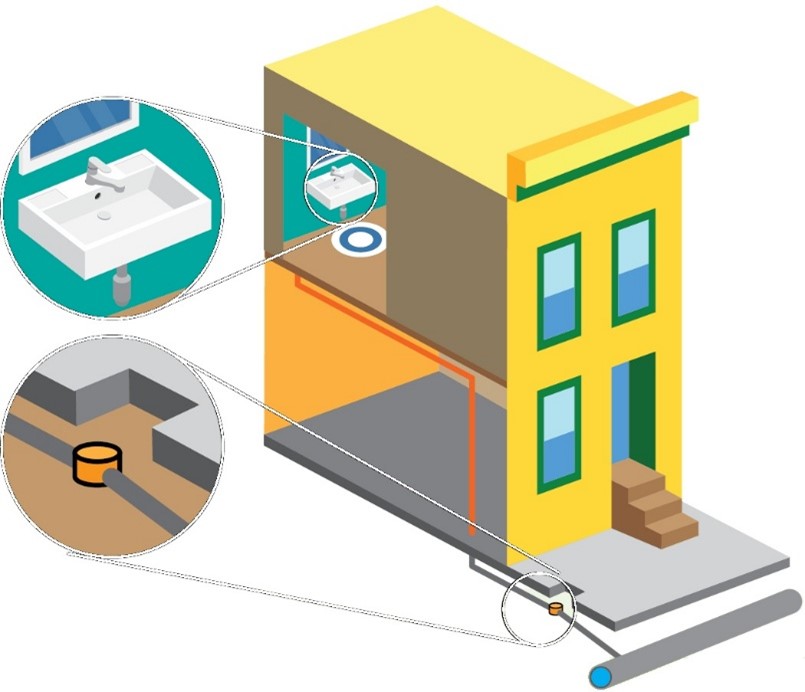
You can test the water service line where it connects to the water meter (under the meter cover usually on the sidewalk).
Water Service Line
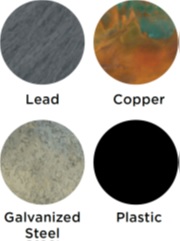
May be made of lead, copper, galvanized steel, or plastic.
Follow These Steps:
You will need:
- Key or a coin
- Strong refrigerator magnet
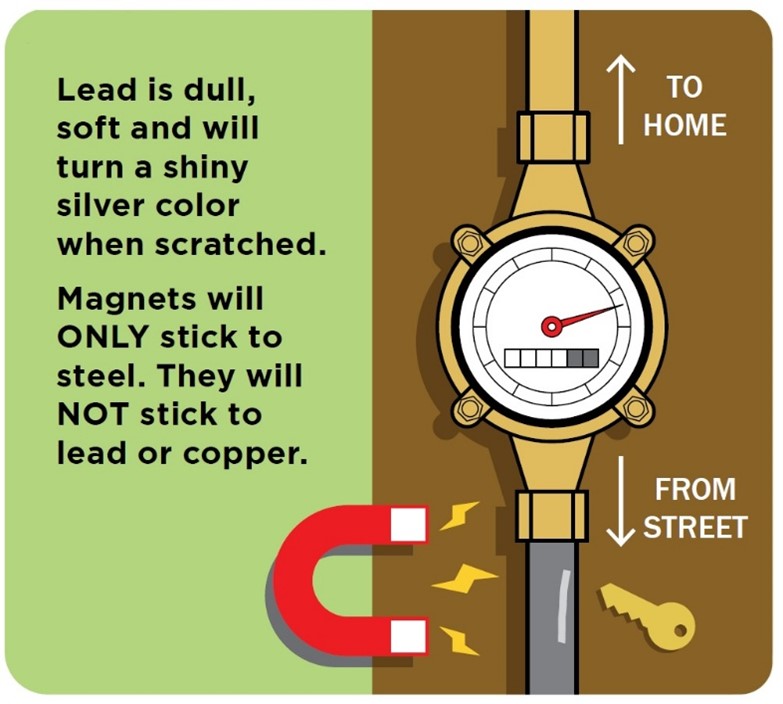
- Find the water meter (usually on the sidewalk in front of your residence). After checking for hazards, look at the pipe that comes through the outside wall of your home and connects to your meter.
- Carefully scratch the pipe (like you would a lottery ticket) with a key or a coin. Do not use a knife or other sharp tool. Take care not to make a hole in the pipe. If the scratch turns a shiny silver color, it could be lead or galvanized steel. NOTE: If pipe is painted, use sandpaper to expose the metal first.
- Place the magnet on the pipe. If a magnet sticks, it is a steel pipe.
Other Ways You Can Check for Lead:
- Lead test kits can be purchased at your local hardware or home improvement store. These kits are used to test what the pipe is made from—not the water inside. Look for an EPA recognized kit.
- A licensed and insured plumber can inspect your pipes and other plumbing for lead. Replacing an older brass faucet or valve may be a simple way to reduce the lead in water.
For any questions about lead in your water:
If you believe your service is made of lead, please contact us to schedule an appointment for an inspector to confirm this. Our staff will provide information on water testing, safety tips and replacement options. Call us at (650) 652-3100, or visit us online at sfpuc.gov/lead.
We’re Committed to Quality
Our highly trained chemists, technicians and inspectors consistently monitor the water we serve—throughout our system, every day of the year. For additional information and materials, please visit sfpuc.gov/waterquality.
For questions about YOUR water, please call 311. You can also visit sf311.org.
December 2025