

Water Efficient Landscape
Purpose
To reduce landscape water use through efficient irrigation design and low water-use plantings.
Who Must Comply?
All residential, commercial, municipal, and mixed-use projects installing or modifying 500 square feet or more of landscape area.
Tier 1 Projects
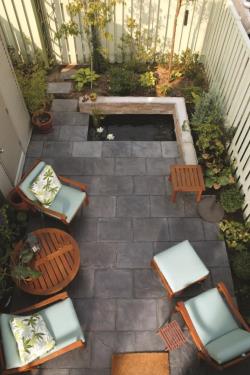
For smaller landscape projects, compliance with the Water Efficient Landscape Ordinance requires a simple checklist application. Your project qualifies as a Tier 1 project if it:
- Includes 1,000 - 2,500 square feet of modified landscape
- Is designed to include at least 75% low water use plants
- Has less than 25% turf area
If your project has over 2,500 square feet of modified landscape area or over 500 square feet of new landscape area, please see the Tier 2 requirements.
Resources for your Tier 1 Project
- Tier 1 Application Form
- Certificate of Completion - to be completed after your landscape has been installed
To submit your landscape project for review, please complete the Tier 1 Application form and any additional documentation to landscape@sfwater.org
Tier 2 Projects
For new and modified landscape projects over 500 square feet, compliance with the Water Efficient Irrigation Ordinance requires professional documentation to be submitted to assure that your landscape is planned and maintained to meet water and irrigation efficiency standards. Your project qualifies as a Tier 2 project if it:
- Includes a new landscape area at least 500 square feet or a modified landscape area at least 2,500 square feet
OR
- Is Tier 1 but includes less than 75% low water use plants and/or more than 25% turf
Applicants for Tier 2 landscape projects must complete a Tier 2 Form and provide landscape documentation for review and approval by the SFPUC before commencing installation. A complete Landscape Documentation Package shall include:
- Tier 2 Application Form - includes Water Budget Worksheets
- Planting Plan
- Irrigation Plan
- Soil Management Report (or soil specification)
- Grading Plan (if significant grading)
- Certificate of Completion - to be completed after your landscape has been installed
To submit your landscape project for review, complete the Tier 2 Application form including the project's plans (in PDF) and email the application package to landscape@sfwater.org.
Resources
-
FAQs and Definition of Terms
Do the requirements apply to me?
The requirements of the Water Efficient Irrigation Ordinance apply to owners of residential, commercial, municipal, and mixed-use properties with a new landscape construction project equal to or greater than 500 square feet or a modified landscape project equal to or greater than 1,000 square feet. The SFPUC provides technical assistance and free plan review to assure your project’s landscape and irrigation plans comply with the ordinance.
How do I comply?
- Determine if your project requires a Tier 1 or a Tier 2 application. Tier 1 projects have modified landscape areas between 1,000 – 2,500 square feet. Tier 2 projects are new landscape areas greater than 500 square feet or modified landscape areas greater than 2,500 square feet.
- Prior to the installation of the landscape, submit the appropriate Tier 1 or Tier 2 application and required documentation to the SFPUC Water Conservation Section for review and approval.
- Install your landscape in accordance with your approved application.
- Submit a Certificate of Completion to the SFPUC Water Conservation Section.
Is this ordinance the same as the Green Landscaping Ordinance?
No, the Water Efficient Irrigation Ordinance is not the same as the Green Landscaping Ordinance. The Green Landscaping Ordinance is part of the San Francisco Planning Code and sets requirements for greening front setbacks of properties, screening and greening parking areas, and selecting and maintaining street trees.
Resources for Water Efficient Landscaping
- San Francisco Plant Water Use List
- Free Water-Wise Evaluations
- Garden for the Environment Free Workshops
- Laundry-to-Landscape Graywater Systems
- Rainwater Harvesting
- H2ouse
- Certified Landscape Irrigation Auditors
Definitions of Terms
Automatic irrigation controller: an automatic timing device used to remotely control valves that operate an irrigation system. Automatic irrigation controllers schedule irrigation events using either evapotranspiration (weather based) or soil moisture data.
Certificate of Landscape Completion: the document required after the landscape and irrigation have been installed.
Certified irrigation designer: a person certified to design irrigation systems by an accredited academic institution, a professional trade organization, or other program such as the US Environmental Protection Agency’s WaterSense Partners irrigation designer certification program and the Irrigation Association’s Certified Irrigation Designer program.
ETo or reference evapotranspiration: a standard measurement of environmental parameters which affect the water use of plants. ETo is expressed in inches per day, month, or year and is an estimate of the evapotranspiration of a large field of four- to seven-inch tall, cool-season grass that is well watered. Reference evapotranspiration is used as the basis of determining the Maximum Applied Water Allowance so that regional differences in climate can be accommodated.
Existing landscape area: a landscape area of any size that has not been rehabilitated or constructed within the previous 12 months.
First construction document: the first building permit issued for a project or, in the case of a site permit, the first building permit addendum issued or other document that authorizes construction of the project. "First construction document" shall not include permits or addenda for demolition, grading, shoring, pile driving, or site preparation work.
Hydrozone: a portion of the landscaped area having plants with similar water needs. A hydrozone may be irrigated or non-irrigated.
Landscape architect: a person who holds a license to practice landscape architecture in the state of California pursuant to California Business and Professions Code.
Landscape area: all the planting areas, turf areas, and water features in a landscape design plan subject to the Maximum Applied Water Allowance calculation, including any adjacent planted areas in the public right-of-way for which the property owner is responsible pursuant to the Section 400.1 or Section 805 of the Public Works Code. The landscape area does not include footprints of buildings or structures unless the footprints include planted areas such as living roofs. The landscape area also does not include sidewalks, driveways, parking lots, decks, patios, gravel or stone walks, other pervious or non-pervious hardscapes, and other non-irrigated areas designated for non development such as open spaces and existing native vegetation.
Landscape contractor: a person licensed by the State of California to construct, maintain, repair, install, or subcontract the development of landscape systems.
Landscape Documentation Deadline: the date by which Tier 1 or Tier 2 documentation must be submitted for approval by the General Manager. This date shall be not more than 100 days after the issuance of the first construction document, or as determined by the General Manager in consultation with the Director of Department of Building Inspection.
Landscape rehabilitation project or rehabilitated landscape: includes any modifications to landscape areas over a 12-month period at a site that cumulatively exceeds 1,000 square feet. A landscape rehabilitation project or rehabilitated landscape does not include turf replacements on sports fields where the turf replaced provides a playing surface, routine weeding, brush removal where no new plant materials are installed, seasonal plantings, and areas dedicated solely to edible plants. A rehabilitated landscape does not include landscape areas where only the irrigation system is retrofitted for the use of recycled water and only plantings that restore areas disturbed by the recycled water retrofits are installed. Recycled water irrigation retrofit projects shall employ best management practices to prevent runoff, ponding and overspray as directed in their recycled water use permit and comply with all applicable local and state regulation.
Low water use plants or climate appropriate plants: plants, shrubs, groundcovers or tree species that meet at least one of the following conditions.
- The species has a water use ranking of “low” or “very low” in Region 1 (North-Central Coast) as established in the California Department of Water Resources 2000 publication “Water Use Classification of Landscape Species” or subsequent editions as it may be updated.
- The species has a water use ranking of “no water”, “little water,” or “little to moderate water” in the climate zone for the planting location as established in the Sunset Western Garden Book, Eighth Edition, published by Oxmoor House on February 1, 2007 or subsequent editions as it may be updated.
- The plantings are part of an engineered stormwater management feature approved by the General Manager pursuant to the San Francisco Stormwater Design Guidelines established by the Public Utilities Commission.
- The Department of Public Works, the Recreation and Park Department, or the General Manager has determined that the species, when watered for sufficient plant health and appearance, is low water use based on the agency’s experience with the species, and the agency has added the species to the Low Water Use and Climate Appropriate Plant List maintained by the General Manager.
- The species appears on the San Francisco Street Tree Species List established by the Department of Public Works Bureau of Urban Forestry.
- The planting is part of a species test approved by the Department of Public Works or the Recreation and Park Department.
- The species has been permitted at the site by the Department Public Works or the General Manager based on wet soil conditions stemming from proximity to naturally occurring water features such as a high water table, springs, ponds, lakes, creeks, and wetlands.
Maximum Applied Water Allowance (MAWA): the amount of annual applied water established by the San Francisco Public Utilities Commission for a landscaped area, using state mandated formulas and accounting for local climatic conditions, that serves as an upper limit for lawful water use for irrigating landscaped areas. The MAWA is based upon the area’s reference evapotranspiration, the ET Adjustment Factor, and the size of the landscape area. The Estimated Total Water Use shall not exceed the Maximum Applied Water Allowance. Special Landscape Areas, including recreation areas, areas permanently and solely dedicated to edible plants such as fruit and nut trees and vegetable gardens, and areas irrigated with gray water or harvested rainwater, are subject to the MAWA with an ETAF not to exceed 1.0.
Mulch or mulching product: any organic material such as leaves, bark, straw, compost, or inorganic mineral materials such as rocks, gravel, and decomposed granite left loose and applied to the soil surface for the beneficial purposes of reducing evaporation, suppressing weeds, moderating soil temperature, and preventing soil erosion.
New construction landscape project: the total area of landscape in the project as defined in “landscape area,” and the modified landscape area for a landscape rehabilitation project.
Overhead sprinkler irrigation systems: systems that deliver water through the air (e.g., spray heads and rotors).
Overspray: the irrigation water which is delivered beyond the landscape area.
Plant factor or plant water use factor: a factor that, when multiplied by ETo, estimates the amount of water needed by plants. The plant factor range for low water use plants is 0 to 0.3, the plant factor range for moderate water use plants is 0.4 to 0.6, and the plant factor range for high water use plants is 0.7 to 1.0. Plant factors for any plant shall be as established in the Department of Water Resources 2000 publication “Water Use Classification of Landscape Species” or subsequent additions. Plants used in the landscape project that are not found in WUCOLS shall use the plant factor of a similar species included on WUCOLS.
Project applicant: the person or entity applying for approval of a landscape project for a new construction project or a landscape rehabilitation project. A project applicant may be the property owner or his or her designee.
Rain sensor: a rain sensing shutoff device that automatically suspends an irrigation event when it rains.
Recycled water, reclaimed water, gray water, or harvested rain water: non-potable water suitable for uses such as landscape irrigation or water features. This water is not intended for human consumption.
Soil moisture sensor: a device that measures the amount of water in the soil. The device may also suspend or initiate an irrigation event.
Special Landscape Area (SLA): an area of the landscape dedicated solely to edible plants, areas irrigated all or in part with gray water or harvested rain water, water features using only harvested rain water, and areas dedicated to active play such as parks, sports fields, golf courses, and where turf provides a playing surface.
Turf: a ground cover surface of mowed grass, including but not limited to Annual bluegrass, Kentucky bluegrass, Perennial ryegrass, Red fescue, Tall fescue, Bermudagrass, Kikuyugrass, Seashore Paspalum, St. Augustinegrass, Zoysiagrass, and Buffalo grass.
Water feature: a design element where open water performs an aesthetic or recreational function. Water features include artificial ponds, lakes, waterfalls, and streams, and fountains, spas, and swimming pools. The surface area of water features is included in the high water use hydrozone of the landscape area. Constructed wetlands used for on-site wastewater treatment or stormwater best management practices that are not irrigated and used solely for water treatment or stormwater retention are not water features and, therefore, are not subject to the water budget calculation.
WUCOLS: Water Use Classification of Landscape Species published by the University of California Cooperative Extension, the Department of Water Resources and the Bureau of Reclamation, 2000, or subsequent editions as it may be updated.
If you have a specific question about your project’s Tier 1 or Tier 2 application, or any questions about the Water Efficient Irrigation Ordinance, please contact the SFPUC Water Conservation Section at landscape@sfwater.org.
Last updated: