

Dirty and Discolored Water - Facts
Quick Summary
Normally the drinking water we provide is clear. Sometimes water that is sandy or cloudy comes from the water main. Other reasons for discolored water can be from your own plumbing. If the water comes out of the tap with an unusual color or has grit in it, you can contact the Water Quality Division. Read this fact sheet and if you have a question, you can call 311.
Dirty and Discolored Water
The San Francisco Public Utilities Commission (SFPUC) Water Quality Division (WQD) responds to consumer complaints regarding drinking water quality issues. Consumers commonly report drinking water quality concerns when there is a change in the physical appearance of water, such as clarity, color and/or the presence of particles.
What Are the Common Causes of Dirty or Discolored Water?
Common complaints regarding water clarity, color and/or the presence of particles can be from different causes, as described below.
Milky/Cloudy Water:
If you notice that your water is milky, cloudy, and/or looks white, there could be air bubbles in the water. To check for air bubbles in the water, fill a clear glass with water and allow it to sit for a couple minutes. The air bubbles should rise to the top and the cloudiness dissipates if there is simply air in the water. Although all water contains dissolved air, changes in water temperature and pressure can cause bubble formation.
Dirty/Discolored Water (Rusty, Brown, Yellow):
Your water can appear to look “dirty” with particles and/ or be discolored due to the presence of rust or sediment from piping materials in the water distribution or building plumbing systems. Common causes include:
• Breaks in the water mains or hit hydrants
• High water flow situations, such as firefighting activities, system tests or maintenance, or construction activities
• Sediment/rust in the water mains or building plumbing
Check for persistent discoloration by opening the cold water tap closest to the water meter (for example, a hose bibb or utility sink) and letting it run for 3 to 5 minutes to see if it clears up. If the water does not run clear after a 5-minute flush, close the fixture, wait one hour, and repeat (it can take several hours for sediments to settle in the water main). If the water clears, you can flush other plumbing fixtures in the home or business by opening faucets or flushing toilets.
How Is Drinking Water Regulated?
Primary maximum contaminant levels (MCLs) for drinking water are established by the U.S. Environmental Protection Agency (EPA) and the State Water Resources Control Board (SWRCB) for the protection of public health. Secondary MCLs, also established by EPA and SWRCB, are used by public water systems to ensure the aesthetic quality of drinking water such as odor, taste, and appearance. To learn more about primary and secondary MCLs and SFPUC’s monitoring results, please refer to the SFPUC Annual Water Quality Report.
To avoid drawing discolored water into your water heater/boiler, avoid using the hot water until the cold water clears up. If your hot water does not run clear, it is possible that the dirty/discolored water has entered your hot water heater or boiler. In that case, it is recommended that you flush the hot water tank by running a hot water tap until the water runs cold. If necessary, you may want to call a plumber to directly flush the water heater or boiler.
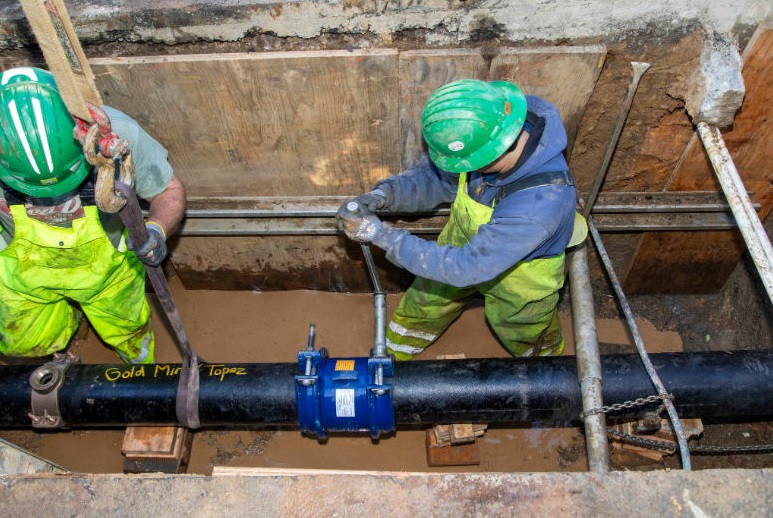
Work on water mains can cause dirty or discolored water
White Particles in Water:
If the particles in the water are white and float to the surface, the dip tube in the hot water heater might have deteriorated. The dip tube extends to near the bottom of the hot water heater and is used to introduce cold water. White particles may also indicate that mineral deposits or scale have formed on piping or plumbing fixtures and have become dislodged.
Black Particles in Water:
If the particles in the water appear to be black and float to the surface, the usual cause is degradation of rubber (elastomer) plumbing parts in plumbing fixtures or hoses inside your home or business. These particles appear oily and will smudge or smear surfaces. Chloramine, which the SFPUCs uses to disinfect the water, can accelerate the degradation process of certain types of rubber. Make sure that all replacement plumbing parts are made of chloramine-resistant material.
Sandy Water:
Sandy water can be caused by particles that have accumulated in the distribution system. If the problem persists, flushing of the water main by SFPUC may be required.
How Does SFPUC Monitor for Dirty or Discolored Water?
The SFPUC routinely monitors for color-causing metals, like iron and manganese, that can be naturally occurring in source waters. These metals are typically not detectable or detected at very low levels in the water SFPUC delivers to customers. These very low levels are below the public health limits set by the EPA and SWRCB and do not pose negative health risks.
The SFPUC also monitors turbidity, which is a measure of the clarity of water (cloudy water has high turbidity and clear water has low turbidity). Turbidity measurements are used to ensure effective chlorination of the Hetch Hetchy water supply, to assess the performance of filtration at treatment plants, and to monitor water clarity in the San Francisco distribution system. To learn about SFPUC monitoring results for metals and turbidity, please refer to the SFPUC Annual Water Quality Report.
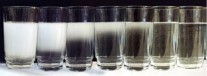
Temporary presence of air in water due to changes in water temperature and pressure (Source: Massachusetts Water Resources Authority, 2026)
Consumer Resources: Regulation/health
U.S. Environmental Protection Agency: “National Secondary Drinking Water Regulations”
•State Water Resources Control Board: “Contaminants in Drinking Water, Secondary MCLs”
SFPUC: “Annual & Triennial Water Quality Reports”
We’re Committed to Quality
Our highly trained chemists, technicians and inspectors consistently monitor the water we serve—throughout our system, every day of the year. For additional information and materials, please visit sfpuc.gov/waterquality.
For questions about YOUR water, please call 311. You can also visit sf311.org.
February 2026