

Leak Alerts: Find and Fix Leaks
Leaks are common and can happen to anyone at any time. The SFPUC’s courtesy Leak Alert Program reviews hourly water use for all meters that transmit data to us electronically. If we detect continuous hourly water use at small properties and continuous night-time use as well as higher than average use at large properties, we will notify the water account holder, property owner and occupant (if not one and the same) by email, text, phone call or mailed letter, depending on the contact information we have in our billing system. We will send up to three rounds of alerts over 10 weeks while the problematic water use continues.
You do not need to contact the SFPUC if you receive a leak alert unless you want to opt out of receiving future leak notices or have questions not addressed on these web pages. For questions, email or call SFPUC Water Conservation at waterconservation@sfwater.org or 415-551-4730.
When does SFPUC issue a leak alert?
Small Residential & Irrigation Accounts: We issue alerts after 48 hours of continuous water use of 7.5 gallons an hour or more. However, for multi-family properties with four to five dwelling units, we also look for a 50% or more increase in average daily use for the past 90 days before issuing an alert.
- Single-family homes and small multi-family properties under 5 dwelling units generally have periods, often when occupants are sleeping, when water fixtures and irrigation systems are not running. At these times, no water use should occur. Continuous use over 24 hours or longer may mean you have a leak, or a tap, hose bib, or valve was accidentally left on.
- Healthy landscapes typically require intermittent watering. When irrigation accounts register continuous consumption for more than 24 hours, this may indicate a leak.
Commercial and Large Multi-Family Properties: Periods of nonstop water usage may reflect normal operations for some commercial and large residential properties (over five dwelling units). We issue alerts upon detection of constant use and spikes in nighttime use higher than nightly average use. This may indicate leaks or problematic use. Our alerts are triggered by two patterns of overnight water use:
- For properties with periodic overnight use that are characterized by at least one hour of no use between 1 AM to 4 AM when averaged over the last 90 days, we issue alerts when water use during that period exceeds the 90-day average by 100% (2 times).
- For properties with regular overnight use that are characterized by less than one hour of no use between 1-4AM when averaged over the last 90 days, we issue alerts when water use during that period exceeds the 90-day average by 300% (4 times).
Why doesn’t the SFPUC send leak alerts sooner?
The SFPUC provides leak alerts as a courtesy program for over 170,000 meters serving 165,000-plus customers of all types and sizes. We set alert thresholds specialized for different to best balance this range and reflect what typically signifies a leak. We want to avoid over-notifying customers for water use that may not reflect a leak. There are also some situations quickly resolved by the customer that don’t need an alert from the SFPUC.
For single-family, small multi-family (2-5 dwelling units) residential and irrigation customers, our system flags 48 hours of constant water use over 1 cubic foot (7.5 gallons) an hour. This threshold provides time for us to verify there are no anomalies with the meter data. It also minimizes sending unnecessary alerts.
For some properties, less than 48 hours of constant use could be due to things other than leaks, such as short-term increases in occupants. Due to the time it takes to receive data, screen, and process it, and transfer information between systems, it takes an additional day for the alert to be generated.
For customers who receive leak alerts via mail, please allow an extra business day for processing.
I Received a Leak Alert Notification, What’s Next?
Evaluate your water use.
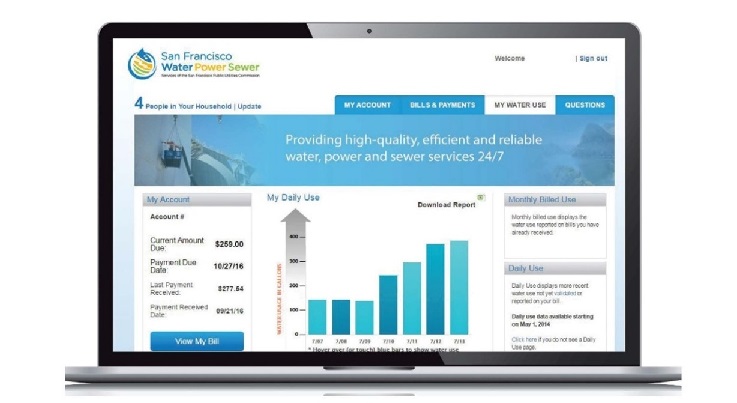 To estimate how much water you could be wasting, multiply the continuous usage rate noted on your leak alert by 24 hours. This will show how much water your leak could be wasting in a single day. Then multiply this daily amount by the number of days nonstop usage has been occurring at the property. Our leak alert will note when constant usage started, or you can check hourly use on My Account.
Log on to or register for MyAccount to view your daily and hourly water usage, and spot unusual spikes. To see when constant water use started and if it has stopped, look under hourly water use to see if there are any hours that show zero (0) water use in the last day. If hourly use never went to zero, the leak is likely unresolved.
If you believe your property experienced multiple days of constant water use and you didn’t receive a leak alert from the SFPUC, check that your contact information on file with us is up to date. You can update your contact information through MyAccount. Providing your email or cell phone will help us notify you promptly. You will need your water bill account number to register. If you don't know your water account number, contact our Customer Service Bureau at customerservice@sfwater.org or 415-551-3000 for assistance.
- Find and Fix Your Leak.
- Review our guidance on common leaks and determine if you can locate and fix your leak yourself or if you need assistance.
- If you can’t find and fix your leak on your own, consider contacting a plumber or professional leak detection company or your building management.
- If you are a business or organization and received a leak alert from us and do not directly maintain the irrigation/landscape on the property, we encourage you to contact the property landscape contractor. They can assist in reviewing the irrigation system for leaks. They will inspect irrigation valves, identify missing or broken sprinkler heads, and flag muddy or wet areas in the landscape along the irrigation lines that may be cracked or ruptured.
- You can also schedule a Free Water-Wise Evaluation with a SFPUC water conservation specialist – We will visit your property and check for potential leaks in standard plumbing fixtures, appliances, and irrigation systems and note ways you can save water and money. Depending on your property type and size, we may be able to take simple actions during our visit, such as replacing toilet flappers or leaking showerheads, that could fix some leaks on the spot. We will provide you a complete report of everything we check. Apply online to request a Water-Wise Evaluation or call 415-551-4730.
- Check if Your Constant Usage Stopped – After taking action to address your leak, log on to MyAccount and view hourly and daily water use to ensure it has returned to normal. For small properties and irrigation accounts, if hourly goes to zero “0” at times when you typically would not be using water, this means your leak likely stopped.
- Consider applying for a toilet, clothes washer or commercial equipment rebate – If you replace an old, leaking fixture or appliance with a qualifying new water-efficient model, you may be eligible for a SFPUC rebate off the purchase cost. Visit Sign Up For Savings for eligibility rules and how to apply.
- Consider Applying for a Leak Allowance - the SFPUC’s Customer Service Bureau may provide a credit off a portion of your last water bill if high water use was caused by a leak and you can provide proof of leak repair. The leak allowance program is open to all single-family residential, multifamily residential, and non-residential accounts.
How to Find and Fix Common Leaks
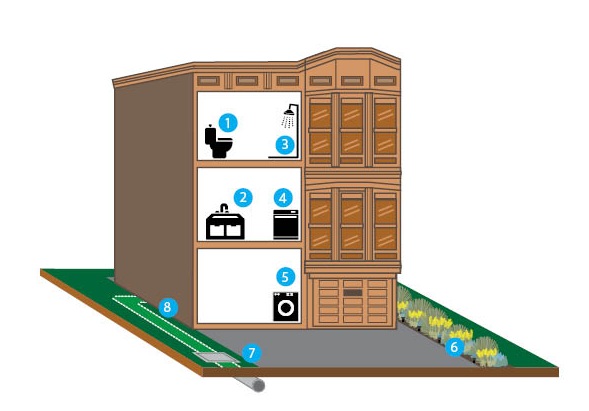
This guidance is meant to help you find common plumbing leaks in homes and small properties and take steps to make simple repairs yourself.
-
1. Toilet Leaks
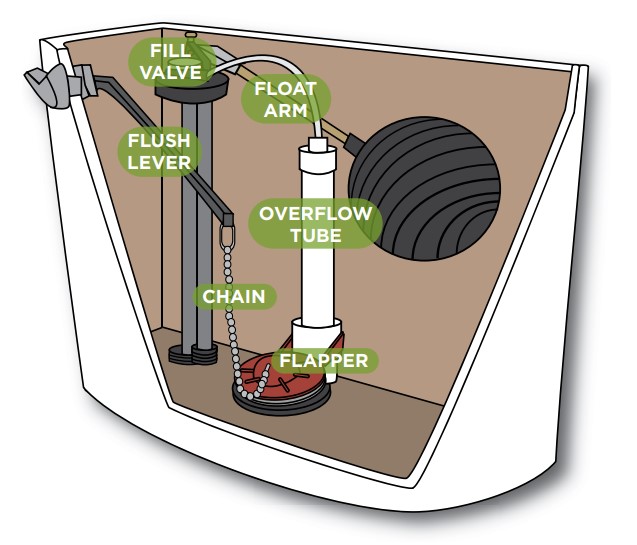
Toilets leaks are the most common household leaks. In many cases, a toilet leak is silent. A leaking toilet can waste up to 3,000 gallons of water in just a few days. Below are the most common leaks associated with a toilet.
- Leaking Flapper: Drop a dye tablet or several drops of food coloring into the tank and wait 15 minutes. If colored water appears in the bowl, the toilet’s flapper is leaking. Disconnect the old rubber flapper and install a new one. Flappers do not last forever so make sure to check for deterioration over time.
- Running Toilet: Do you jiggle the handle to keep the toilet from running? If so, the flush lever and chain, or the handle itself, may be sticking. Adjust the nut that secures the flush lever in the toilet tank. If that does not work, the handle may have to be replaced.
- Loose Handle: If the handle feels loose, the nut inside the tank may be loose. Remove the toilet lid and tighten the nut so that the flush handle is tight but moves freely when used. Make sure that the flapper does not get stuck open when the toilet is flushed.
- Leaking Fill Valve: Remove the toilet lid from the tank and mark the water level with a pencil. Flush the toilet. When the tank refills, the water level should return to the marked line. If the tank’s water level fills above or below the marked line, adjust the water level in the tank so that the water shuts off 1-inch below the overflow tube.
Some properties may experience intermittent leaks in toilets and other plumbing fixtures that last a few hours or only a day or two. These would not trigger a courtesy alert from the SFPUC. Toilets often run intermittently as flappers and fill valves age. We advise residents to check and replace internal parts before occasional leaks become constant.
Tip: SFPUC provides free toilet dye tabs, flappers, and fill valves when you schedule a Water-Wise Evaluation. SFPUC also offers a rebate for the purchase and installation of qualifying, ultra-high efficiency toilets!
-
2. Faucet Leaks
Faucet leaks commonly occur from worn parts or from loose water supply connections. A faucet that leaks one drip per second can waste more than 3,000 gallons per year. Leaks may be obvious, such as a persistent drip, or more hidden, like a leak under the sink. Provide regular maintenance, such as:
- Tightening the water supply tubing at the fittings. Make sure the fittings are secured tightly at the wall and faucet. If this does not prevent more leaking, the water supply tubing may need to be replaced.
- Removing the aerator and soaking it in vinegar to remove mineral buildup; recommended once a year.
Tip: SFPUC provides free aerators when you schedule a Water-Wise Evaluation
-
3. Shower Leaks
Shower leaks commonly occur where the showerhead attaches to the shower pipe. This type of leak may cause water to drip or spray from the back of the showerhead. Here are some simple ways to keep your showerhead from leaking, while delivering maximum performance:
- Remove the showerhead and soak it in vinegar to remove mineral buildup about once a year.
- Replace the washer or “O” ring inside the showerhead to create a tighter connection.
- Apply Teflon tape or plumbers’ putty to the thread of the shower pipe stem before reinstalling the showerhead to prevent leaks.
Tip: SFPUC provides free showerheads when you schedule a Water-Wise Evaluation.
-
4. Dishwashers
A flexible tube or hose is used to supply hot water to the dishwasher. It usually runs under the kitchen sink between the dishwasher and the faucet’s hot water supply line. If the water supply to the dishwasher is leaking, the tube or hose can be replaced, or the fittings can be tightened.
- Is there water pooling on the floor near or under your dishwasher when it’s running? That’s usually a sign of a leak.
-
5. Clothes Washer
The hot and cold flexible water supply lines to your clothes washer have screens that can clog. Unscrew the supply lines, clean the screens and reattach. If flow is still restricted, check to see if the shut-off valves are fully open. If the hot water flow is still low, the inlet valve of the water heater may be partially turned off.
- Does your washing machine leak water on the ground or drip down the outside of the machine when it’s in use? A leak may be caused by a loose or cracked hose or inlet valve.
- If in need of a new clothes washer, please check out our residential or commercial clothes washer rebates!
-
6. Irrigation System Leaks
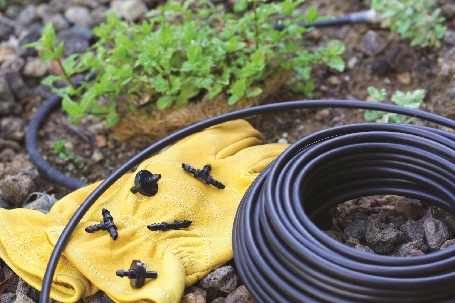 Broken or missing sprinkler heads, leaking valves, and cracked distribution lines contribute to excess runoff, deteriorate the health of your landscape, and can even double your water bill! Common Irrigation System Leaks include:
- Broken Sprinklers: To check your sprinkler, first turn on your irrigation system. Then, look at the sprinkler heads or drip emitters. Check for any damage such as clogs, leaks, or faulty heads that may be broken or misdirected. You may have an underground leak if your sprinkler heads do not pop up and spray. If you have a drip system, listen to find any missing emitters.
- Broken Irrigation Pipes: A cracked or broken irrigation lateral or pipe can run constantly and waste thousands of gallons of water a day. Inspect the area between your water meter and irrigation valves looking for wet or muddy areas. These areas may indicate an underground pipe leak.
- Leaking Irrigation Valves: Over time, irrigation solenoid valves can deteriorate and fail to seal properly. This allows constant water flow through your irrigation system. Check to see if valves are functioning properly by activating each of them. Then, visually inspect the valves and see if they open and close correctly.
- Malfunctioning Backflow Device: A backflow device is a one-way valve that prevents contaminated water from flowing backward into our clean water supply. If it malfunctions, that could pose a health and safety risk. Contact a backflow device professional to inspect your system's backflow device to ensure it is operating correctly.
Please note that irrigation leaks may occur only when the system is on and never reach the SFPUC’s Leak Alert Program’s review period of constant use threshold. We recommend visually inspecting irrigation systems periodically to check for problems.
Tip: SFPUC provides irrigation controller rebates. Large, irrigated landscapes over one half-acre may be eligible for detailed technical evaluations and grant funds for water-saving irrigation and landscape retrofits.
-
7. Service Line

Your water service line is also referred as the house pipe or supply line. It is located underground and brings water into your home from the SFPUC’s water main. The service line begins at the water meter. It usually includes a main shut-off valve before it enters your home’s plumbing system. Depending on the age and material of your service line, leaks can occur and go unnoticed.
- Locate your service line. Find where your service line enters the home. Then, check for leaks or listen for running water. A service line with a major leak may cause standing water or ponding on the surface above the service line. This may look like a broken irrigation pipe. Service line repairs require the help of a licensed plumber. Water Meters: Please do not access water meters. This is to prevent personal injury and damage to SFPUC equipment. SFPUC field staff are the only ones that should access water meters. To request a free site visit from an SFPUC employee, contact Customer Services at 415-551-3000. This site visit will include a check of your water meter. It will also provide information about how the meter reads and sends water usage data.
-
8. Other Leaks
Leaks from ponds, pools, hot tubs, fountains, ice machines and water heaters can waste hundreds of gallons per day. Check these potential leak sources on a regular basis to ensure they are operating efficiently and not wasting water.
- State and local law requires fountains and decorative water features to be recirculating. Remove or replace any that are not recirculating.
- Leaks may also occur in pipes that are either behind walls or underground. These leaks may require a plumber to repair.