

PFAS and Drinking Water
Quick Summary
You may have heard of a group of chemicals called PFAS. They are resistant to heat, water and oil. PFAS were used in many consumer and industrials products but were phased out about 20 years ago. PFAS can get into water under ground or on the surface near factories where they were produced or used. PFAS can also be found near where they were used for firefighting. Examples are places like airfields, military bases and oil refineries. Tests on San Francisco drinking water have not detected any PFAS. You can learn more about PFAS on this page.
What are PFAS?
Per- and polyfluoroalkyl substances (PFAS) are a group of synthetic organic chemicals that are resistant to heat, water, and oil and have been widely used in consumer and industrial products, as well as for emergency fire response. More than 15,000 PFAS compounds have been used as a surface coating, protectant, surfactant, or other purposes. The two PFASs with the highest production volumes have been perfluorooctanoic acid (PFOA) and perfluorooctane sulfonic acid (PFOS).
PFOA was used in the manufacture of consumer goods such as Teflon (i.e., polytetrafluoroethylene). PFOS was the key ingredient in Scotchgard (fabric protector) and numerous stain repellents. In the United States, PFOA and PFOS were phased out in the early 2000s, however, they do not break down easily and are persistent in the environment. Furthermore, PFOA and PFOS are still produced internationally and can be imported into the United States in consumer products such as, carpet, clothing, packaging, home textiles, and non-stick cookware.
Furthermore, PFOA and PFOS are still produced internationally and can be imported into the United States in consumer products such as, carpet, clothing, packaging, home textiles, and non-stick cookware.
How is One Exposed to PFAS?
Exposure to PFAS can occur through food, which can become contaminated with PFAS through contaminated soil or water used to grow the food, food packaging containing PFAS, or equipment used during food processing. In addition, some foods such as fish, meat, eggs, and leafy vegetables may contain PFAS from bioaccumulation and crop uptake (State Water Resources Control Board [SWRCB], 2019). People can also be exposed to PFAS from commercially treated products that have been treated with PFAS for non-stick, stain-repellant, or water-repellant qualities. Examples include pots and pans, carpet, and water repellent clothing. Furthermore, people who work in a facility that manufactures goods with PFAS can be exposed
to these compounds in certain occupational settings or from contaminated air (EPA, 2018).
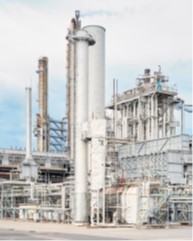
Most PFAS contamination of drinking water supplies is localized and associated with industrial production or waste disposal facilities. Known sources of PFAS contamination include: groundwater and surface water below former industrial facilities where PFAS compounds were produced, and groundwater near locations where fire-fighting foams containing PFAS were used (e.g., airfields, military bases, or oil refineries).
How Can I Reduce Potential Exposure to PFAS
San Francisco Public Utilities Commission (SFPUC) tests on San Francisco drinking water have not detected any PFAS compounds. Since 2012, five rounds of PFAS testing have been completed. No PFAS contaminants were detected.
According to the Agency for Toxic Substances and Disease Registry (ATSDR), if PFAS in drinking water exceeds the EPA Lifetime Health Advisory, alternative water sources should be used for drinking and food preparation. Per ATSDR guidelines, other ways to avoid PFAS exposure include: checking consumer product labels for PFAS and checking for fish advisories in water bodies where you fish.

If PFAS Are Found in Drinking Water, Is There Treatment That Can Remove PFAS?
According to EPA, if PFAS are found in drinking water, removal is possible by several technologies including activated carbon, ion exchange, and reverse osmosis. These treatment approaches can be adopted by a utility at a treatment plant or by water system customers at individual buildings or homes (see EPA webpage: epa.gov/pfas).
PFAS Monitoring in San Francisco Drinking Water Supplies by SFPUC
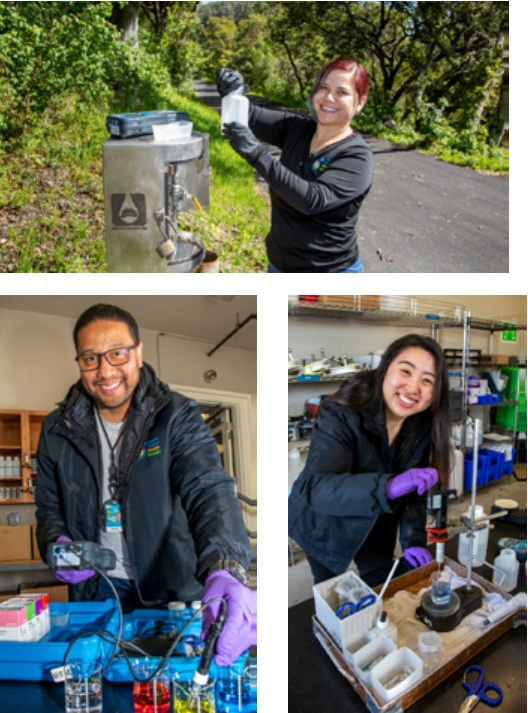
The SFPUC has been proactive in PFAS monitoring of its drinking water supplies since 2012. Five rounds of monitoring have been completed that include the following:
- Preliminary monitoring of 6 PFAS for a SFPUC contaminants of emerging concern (CEC) screening evaluation in 2012.
- EPA’s 3rd Unregulated Contaminant Monitoring Rule (UCMR 3) for 6 PFAS in 2013.
- First-round of voluntary monitoring of 18 PFAS with a new and improved method (EPA Method 537.1) in 2019.
- Second-round of voluntary monitoring of 25 PFAS in 2020.
- EPA’s 5th Unregulated Contaminant Monitoring Rule (UCMR 5) for 29 PFAS in 2023.
PFAS results from the first four rounds of monitoring can be accessed in the SFPUC 2022 CEC Final Report here: sfpuc.gov/sites/default/files/documents/SFPUC_2022_Final_ Report_CECs.pdf. All PFAS results including from UCMR 5 were below detection limits at the time of monitoring.
What Are the Risks?
Studies have shown that PFAS can accumulate and stay in the body for long periods of time and that elevated exposure to PFAS may lead to adverse health impacts. According to the Centers for Disease Control and Prevention (CDC), PFAS may contribute to decreased fertility, hormonal changes, increased cholesterol, weakened immune system response, increased cancer risk, and growth and learning delays in infants and children. During several national surveys, PFOA and PFOS were found in the blood of nearly all people tested. However, CDC has found that PFOA and PFOS blood levels have steadily decreased in U.S. residents since 1999 (CDC, 2019).

How Are Federal and State Regulators Responding to PFAS in Drinking Water?
In April 2024, the EPA established maximum contaminant levels (MCLs) for PFOA and PFOS at 4.0 parts per trillion (ppt) each, and for perfluorononanoic acid (PFNA), Perfluorohexane sulfonate (PFHxS), and Hexafluoropropylene oxide dimer acid (HFPO-DA) at 10 ppt each. Additionally, the EPA introduced a Hazard index (HI) approach for chemical mixtures containing two or more of PFNA, PFHxS, HFPO-DA, and PFBS, setting the combined MCL at unitless value of 1. These regulations are subject to change. Further details regarding the HI can be found here: epa.gov/system/files/documents/2024-04/pfas-npdwr_fact-sheet_hazard-index_4.8.24.pdf
California established Notification Levels for PFOA of 4.0 ppt, PFOS of 4.0 ppt, PFBS of 500 ppt, PFHxA of 1.0 ppt, and PFHxS of 3 ppt. Per California Health and Safety Code, Section 116455, if Notification Levels are exceeded, the governing body of the areas served by the water are required to be notified. In April 2024, California EPA’s Office of Environmental Health Hazard Assessment (OEHHA) adopted public health goals (PHG) for PFOA of 0.007 ppt and PFOS of 1.0 ppt. A PHG is not a regulatory standard and is not enforceable. However, a PHG serves as a basis for the SWRCB to establish the corresponding drinking water standard after considering the technical and economic feasibility. Further details regarding these PHGs can be found here: oehha.ca.gov/water/report/perfluorooctanoic-acid-pfoa-and-perfluorooctane-sulfonic-acid-pfos-drinking-water
Consumer Resources: Regulation/Health
- CDC and ATSDR. PFAS and Your Health
- SWRCB.2024. PFAS
- EPA. PFAS Explained
We’re Committed to Quality
Our highly trained chemists, technicians and inspectors consistently monitor the water we serve—throughout our system, every day of the year. For additional information and materials, please visit sfpuc.gov/waterquality.
For questions about YOUR water, please call 311. You can also visit sf311.org.
December 2025