

Quinoline and Drinking Water
Quick Summary
Quinoline is a chemical. It can be used to make coal tar. Until around 1950, coal tar was sometimes used to line drinking water pipelines to prevent corrosion. In very large amounts, quinoline is bad for health. Over the past 20 years, the San Francisco Public Utilities Commission removed all coal tar linings in City reservoirs and removed or relined a portion of the pipelines that had coal tar. This webpage explains that our drinking water is safe from quinoline.
What is Quinoline?
Quinoline (C9H7N) is a semi-volatile organic compound that is used as a pharmaceutical (anti-malarial) and flavoring agent and is an intermediate chemical in the manufacture of other products, such as, pesticides and dyes. Quinoline is also present in cigarette smoke, coal, and coal tar. Coal tar is the primary source of commercial quinoline (United States Environmental Protection Agency [USEPA], 2016).
How is One Exposed to Quinoline?
Exposure to quinoline could occur by taking an anti-malarial drug, consuming food or beverages with quinoline as an additive, or through inhalation of cigarette smoke (USEPA, 2001). Quinoline is soluble in water.
During the first half of the 1900s, coal tar was commonly used in the drinking water industry as a lining material to prevent steel corrosion of reservoirs and pipelines. Over the past 20 years, SFPUC removed all coal tar linings in City reservoirs and removed or relined a portion of the pipelines that contained coal tar. There are some limited sections of transmission pipeline with coal tar lining in contact with SFPUC’s drinking water and quinoline may be detected.
What Are the Risks of Quinoline?
The USEPA classifies quinoline as a probable human carcinogen. According to USEPA, quinoline concentrations in drinking water of 0.01 to 1 μg/L (part per billion, ppb) are associated with a cancer risk of 1 in a million to 1 in 10,000 over a lifetime of exposure, respectively.
How Can I Reduce Potential Quinoline Exposure from Drinking Water?
San Francisco’s drinking water consistently meets all federal and state drinking water standards and is safe to drink throughout the service area. SFPUC’s monitoring and mitigation efforts have made it unlikely that even trace levels of quinoline would be present at a customer’s tap. Therefore, no additional steps are necessary by customers.
However, if customers wish to pursue additional, precautionary measures, commonly available pitcher filters and kitchen tap filters with activated carbon can remove a wide range of organic compounds such as quinoline.
How are Federal and State Regulators Responding to Quinoline in Drinking Water?
Currently, there are no federal or California standards to regulate quinoline in drinking water. USEPA included quinoline as one of about 80 substances on its Contaminant Candidate List 5 (CCL 5), a list published in 2022 to help USEPA establish priorities for possible regulatory actions in the future.
Furthermore, USEPA’s Unregulated Contaminant Monitoring Rule 4 (UCMR 4) published in 2016 required utilities to monitor treated drinking water for 30 contaminants, including quinoline. SFPUC completed the required UCMR 4 monitoring in January 2019 and, as summarized below, low levels of quinoline (0.02 to 1.5 ppb) were detected at some locations.
UCMR 4 Quinoline Monitoring Results for San Francisco Water System
| Location | Test Results (parts per billion)* |
|---|---|
| Point of Entry | <0.02 to 0.029 |
| Distribution System Pump Station | <0.02 to 1.500 |
| Distribution System Reservoir Outlets | <0.02 to 0.026 |
*Quinoline detection limit is 0.02 ppb.
In response to these UCMR 4 detections, SFPUC conducted systemwide quinoline monitoring in December 2019. Most results were non-detect, except for a few locations in the distribution system of San Francisco that had low quinoline detections (0.02 to 0.21 ppb). These detections appeared to be influenced by (1) the presence of coal tar lining and (2) water stagnation from non-operational periods. Consumers would not have long-term exposure to elevated quinoline levels (>0.10 ppb) as complete outages due to maintenance are rare. Furthermore, quinoline levels measured upstream and downstream of the elevated detections in 2018/2019 were non-detect or near the detection level (<0.02 to 0.022 ppb).
How is SFPUC responding to these low level Quinoline detections?
There are no federal or California regulatory standards for quinoline in drinking water and, after UCMR 4, there are no additional monitoring or reporting requirements for quinoline. However, due to the detection of quinoline at some locations, SFPUC is taking proactive, voluntary actions to minimize, and eventually eliminate, the presence of quinoline in drinking water. These steps include:
Short-term measures
- Monitor and assess pipelines that have been out of service for prolonged periods of time.
Long-term measures
- Ensure new reservoirs and pipelines only use NSF-approved lining materials (NSF International is an independent organization that conducts testing and establishes public health standards for materials that come in contact with drinking water).
- Complete removal of coal tar linings from existing host pipelines down to bare metal during water system upgrades.
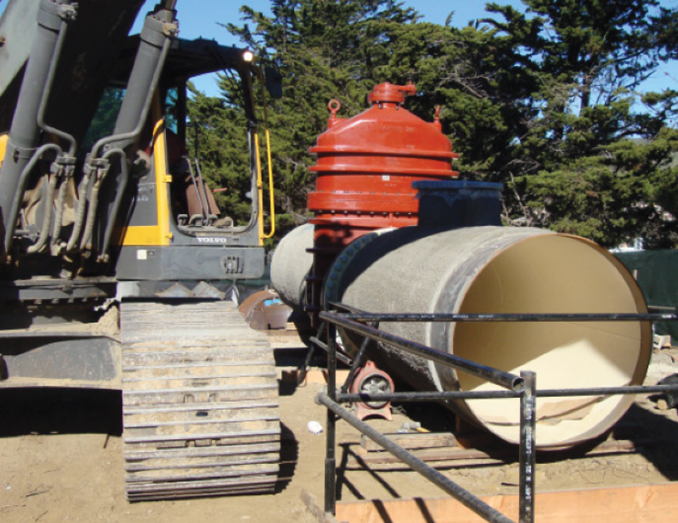
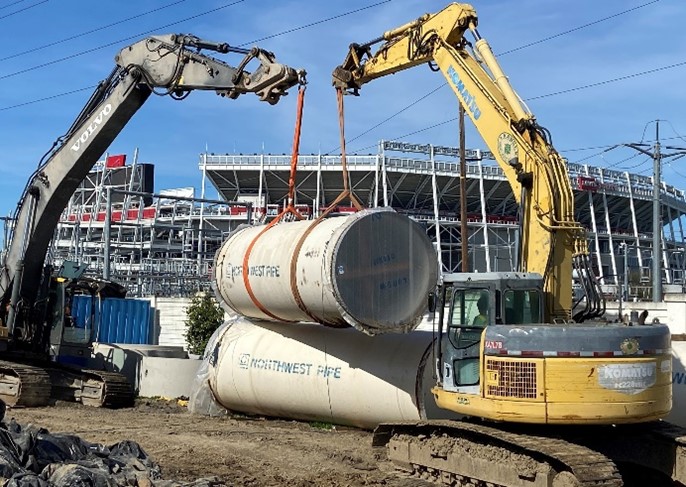
- Implement protective strategies on coal tar lined pipes when removal of coal tar is not feasible. For example, encapsulate coal-tar linings with new NSF-approved linings to prevent coal tar from contacting and leaching quinoline into drinking water, or insert a smaller pipe inside the existing coal tar lined pipe, a technology known as slip-lining.
- Conduct quinoline monitoring at targeted locations to track long-term improvements, as part of SFPUC’s Contaminants of Emerging Concern (CEC) program. To receive a copy of the 2025 CEC Report, please contact us at info@sfwater.org.
Consumer Resources: Regulation/Health
NSF International: Public Health and Safety Organization nsf.org
USEPA: Contaminant Candidate List 5, Chemical Contaminants
We’re Committed to Quality
Our highly trained chemists, technicians and inspectors consistently monitor the water we serve—throughout our system, every day of the year. For additional information and materials, please visit sfpuc.gov/waterquality.
For questions about YOUR water, please call 311. You can also visit sf311.org.
March 2026