

Microplastics and Drinking Water
Quick Summary
Plastic is used to make many items. When plastic is thrown out, it can cause pollution in the environment. For a long time, people have cared about plastic pollution like containers and bags. Now, people are worried about tiny pieces, called microplastics. Microplastics have been found throughout the environment. Scientists are studying about how much microplastics are in the environment. They want to know how they might be harmful to health. You can read about microplastics on this webpage.
What Are Microplastics?
Plastic pollution has long been a concern in the environment, and in more recent years, microplastics have emerged as an area of focus. Microplastics have been found throughout the environment and scientists are learning more about their prevalence and potential health impacts.
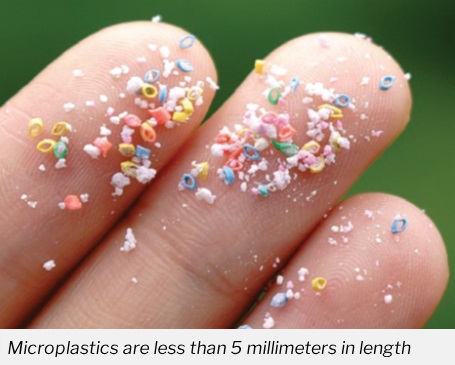
Microplastics are plastic particles that are less than five millimeters in length - about the length of a pencil-top eraser. They can be as small as a nanometer – so small that you would need a microscope to see it. Microplastics are generally grouped as either primary or secondary microplastics. Primary microplastics are manufactured and intended to be the size of a microplastic. These may be in the form of microbeads for use in personal care products (such as facial cleansers and cosmetic products) and as abrasives in cleaning products. Secondary microplastics form from larger pieces of plastic that degrade into smaller and smaller pieces.
How Do Microplastics Enter Water Sources?
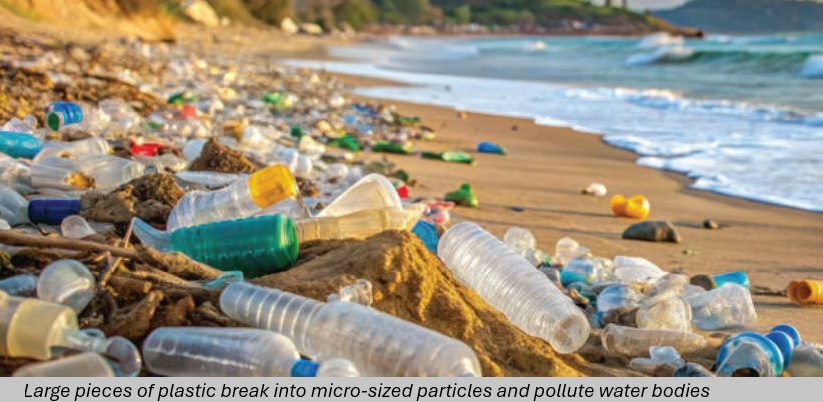
Microplastics are present throughout the environment and have been detected in ocean water, streams, lakes, rivers, wastewater, and drinking water – both bottled and tap water. They form from large plastic debris, such as bottles and bags, that are broken down into micro-sized particles over time. They also come from microfibers that are in a variety of sources including synthetic textiles (e.g. nylon) and car tires. Additionally, microplastics come from sources such as personal care products and household cleaning products containing microbeads. Microplastics may form directly in water bodies (streams, lakes, rivers, and the ocean) through plastic litter that degrade with exposure to the sun, wind, and water. They may also be carried into water bodies by stormwater, untreated water sources, and treated wastewater that release into streams, lakes, rivers, and the ocean.
Microplastics are removed in typical wastewater treatment processes by up to 90% depending on the size of the particle. Smaller microplastics and microfibers that are not removed are released with treated wastewater into water bodies. To help reduce the release of microbeads into water bodies, Congress passed the Microbead-Free Waters Act of 2015 which prohibits the manufacturing, packaging, and distribution of rinse-off cosmetics containing plastic microbeads.
Is Our Drinking Water at Risk of Contamination from Microplastics?
Drinking water in our system comes from a variety of highly protected sources carefully managed by the SFPUC. These sources include water from snowmelt and rainfall that are stored in protected reservoirs in the Sierra Nevada, Alameda County, Santa Clara County and San Mateo County. Our safeguarded water sources and reservoirs are not widely accessed by the public or significantly exposed to microplastics in the environment, providing us a water supply that is at lower risk of contamination from microplastics compared to other water supply sources.
Health Considerations
Much work remains to be done to characterize and understand the exposure of microplastics
in drinking water and the potential human health risks. Scientists and researchers around the world continue to advance their knowledge of microplastics and the exposure risk through drinking water. Within the SFPUC, we actively engage with global and national experts to remain current of on-going research and technology advancements to support our commitment of delivering clean and safe drinking water to our customers.
Microplastics Monitoring
The SFPUC provides safe and reliable drinking water that consistently meets all state and federal drinking water standards. Drinking water quality is regulated by established limits, set by the Division of Drinking Water of the State Water Resources Control Board (SWRCB), for the protection of public health. The SFPUC routinely monitors all its waters, including surface water reservoirs and treated water delivered to homes, to ensure it meets or exceeds all established drinking water standards. 
The SWRCB adopted a four-year plan for monitoring and reporting microplastics across multiple water agencies throughout the state, including the SFPUC. Data collected by the SWRCB will be used to increase understanding of microplastics and its exposure to consumers through drinking water and will be shared with the public. The science and technology for sampling and analyzing microplastics continues to evolve, and the SWRCB is working to accredit laboratories that will analyze collected samples.
The SFPUC anticipates beginning monitoring of microplastics by 2026 after the sampling protocol is finalized by the SWRCB and accredited laboratories are accessible.
Consumer Resources: Regulation/Health
State Water Resources Control Board, Microplastics
Water Research Foundation (Wrf). Microplastics In Water 2020 Microplastics Fact Sheet
U.S. Environmental Protection Agency Microplastics Fact Sheet
We’re Committed to Quality:
Our highly trained chemists, technicians and inspectors consistently monitor the water we serve—throughout our system, every day of the year. For additional information and materials, please visit SFPUC Water Quality.
For questions about YOUR water, please call 311. You can also visit sf311.org.
March 2026