
Wildfires and Drinking Water Quality
Quick Summary:
Wildfires are getting larger and more common in California. Climate change is causing extremes like less rain and more heat. Another problem is that plants grow fuller and thicker when fires are prevented for a very long time. That creates more fuel for future fires. Also, when people build homes and businesses in the forest it's hard to protect them. The water we supply comes from three different regions. Wildfires within any of these areas could be harmful and could reduce water quality. This page explains how wildfires can affect water quality and how we protect the water supply.
General Overview
Wildfires in California have become more frequent and more severe with climate change, historical forestry management practices which have led to increased fuel loads, and population growth near forested areas. The San Francisco Public Utilities Commission (SFPUC) operates a Regional Water System that relies on surface water supplies located in three watersheds. Surface water is water that comes from rainfall or snowmelt. Wildfires within any of these watersheds have the potential to impact the quality of these surface waters and the facilities that are critical to our operations.
SFPUC’s surface water sources are located in three watersheds:
1) Hetch Hetchy Watershed in Yosemite National Park,
2) Alameda Watershed near Sunol, and
3) The Peninsula Watershed, south of San Francisco
Like all forested and open land, these watersheds are vulnerable to wildfires. One of the most significant fires near SFPUC’s Hetch Hetchy Watershed was the Rim Fire in 2013. The Rim Fire started in Stanislaus National Forest and burned 402 square miles (257,000 acres) of the area. The Rim Fire came within a mile of Hetch Hetchy Reservoir but did not cause significant impacts to the SFPUC drainage area.
In 2020, the SCU (Santa Clara Unit) Lightning Complex in the Alameda Watershed burned land surrounding San Antonio and Calaveras Reservoirs. The fire resulted in low soil burn severity because of low fuel loading. The effect on the burned areas is described as similar to a prescribed burn. Winter rains that come after fires such as these could cause increased erosion into the reservoir. This could increase the turbidity, or the number of small particles, of the reservoir’s water. SFPUC staff regularly monitor for these conditions.
After the SCU Lightning Complex Fire, the SFPUC developed an East Bay Fire Response sampling plan. The plan included special monitoring over 6 months to assess water quality impacts from the wildfire. Monitoring showed that the SCU Lightning Complex Fire mostly did not impact SFPUC reservoirs even after rain.
Summary
The San Francisco Public Utilities Commission (SFPUC) is a public agency. We run a regional water system. This system delivers drinking water to over 2.7 million residents in the Bay Area. Part of the system includes reservoirs. Wildfires can happen on the lands around these reservoirs. Wildfires near reservoirs can impact water quality and the SFPUC’s infrastructure.
Here’s how the SFPUC works with Cal Fire to lessen potential impacts of wildfires:
- Post fire analysis
- Goat grazing to reduce overgrown vegetation
- Prescribed burns, or a controlled fire set on purpose to lessen the risk of wildfires
The SFPUC is always tracking the quality of our drinking water. If there is a wildfire, we can see if it is affecting water quality. Our treatment plants can adjust to treat water even during a wildfire. The water we deliver meets all federal and state water quality standards.
If there is a wildfire, you can visit the homepage of our website, sfpuc.gov, or sfpuc.gov/service alerts. We will post any updates, including any water quality notices, on these pages.
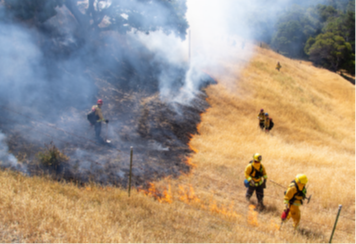
Prescribed burn by SFPUC and CalFire in 2022
All water from our East Bay and Peninsula reservoirs is filtered at Sunol Valley Water Treatment Plant or Harry Tracy Water Treatment Plant prior to delivery to customers. SFPUC closely tracks water quality conditions to ensure treatment adjustments are implemented, if needed.
Our operators can make adjustments at the plants in response to changing water conditions. The goal is to ensure that our customers’ water supply remains unaffected by these fires.
Watershed Impacts
When wildfires burn watersheds that contain drinking water reservoirs, there are several potential impacts that need to be monitored and mitigated by water utilities. These potential impacts include:
- Increase in erosion, causing increase in sediment and turbidity at treatment plants.
- Increase in nutrients, leading to an increase in algal blooms and algal byproducts in reservoirs, e.g., taste and odor contaminants like geosmin and MIB may increase during certain algal blooms.
- Increase in metals, such as, iron, manganese and other heavy metals from ash washing into the reservoir.
- Increase in organic concentrations from erosion and/or ash deposition, typically measured as total organic carbon (TOC) or dissolved organic carbon (DOC), which can increase disinfection byproducts (DBPs), e.g., trihalomethanes and haloacetic acids.
- Modification to the type of organics composing the TOC which can increase DBPs. Organic carbon resulting from fire is more humic and aromatic than pre-fire organic carbon and thus more likely to produce DBPs.
- Short-term effects from fire-fighting retardants used by aircraft (these potential impacts are typically from nutrients, such as nitrogen and phosphorus).
Water System Infrastructure Impacts
In addition to watershed impacts, drinking water systems can be directly impacted by wildfires when the wildfire covers areas occupied by treatment plants, storage tanks, and/or the distribution system. The Sunol Valley Water Treatment Plant and the Harry Tracy Water Treatment Plan are both located within watersheds that are vulnerable to wildfires. These facilities would be thoroughly investigated to ensure the highest level of quality in operations and water treatment after any wildfire impact.
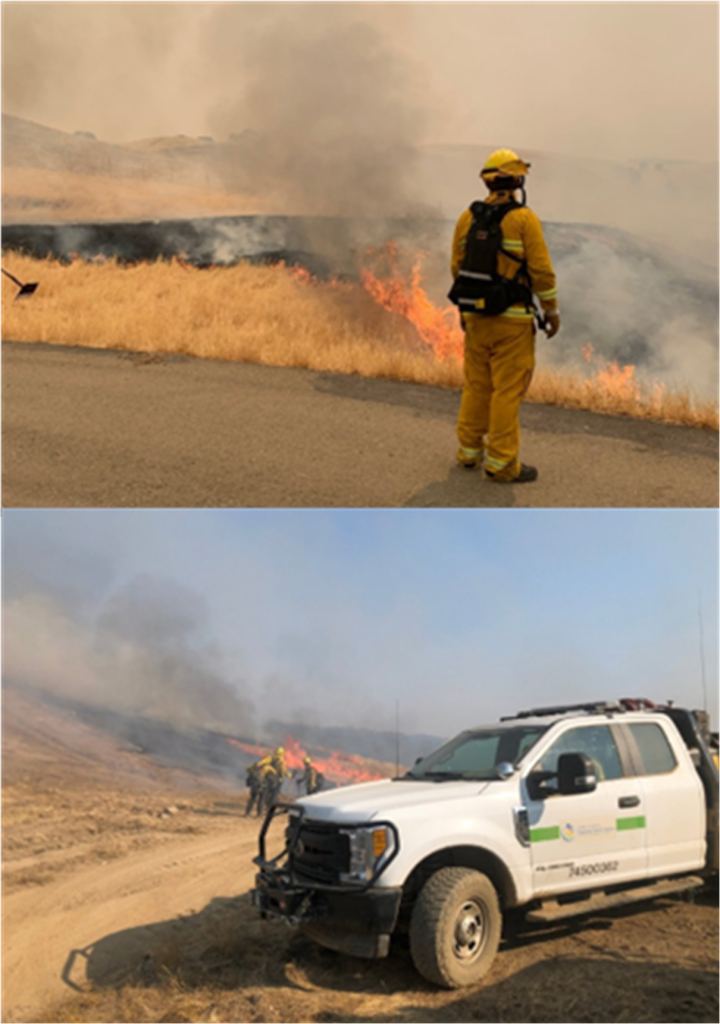
SCU complex fire from August 2020
Consumer Resources: Regulation/Health
CAL FIRE Map
U.S. Environmental Protection Agency: Air Quality Map
SWRCB: Wildfire and Water Quality
We’re Committed to Quality:
Our highly trained chemists, technicians and inspectors consistently monitor the water we serve—throughout our system, every day of the year. For additional information and materials, please visit sfwater.org/quality. For questions about YOUR water, please call 311. You can also visit 311.org.
March 2026