

What is Green Infrastructure?
Green infrastructure (see examples below) manages stormwater near where it falls, reducing the amount that enters San Francisco's combined sewer system. This reduces the risk of local flooding during heavy storms. Green infrastructure also creates beautiful urban spaces that bring nature into our streets, schools, and homes. It helps prevent pollutants from reaching our waterways, keeping them cleaner and safer.
San Francisco is on track to meet an ambitious goal: by the year 2050, capture one billion gallons of stormwater each year using green infrastructure. That would be about one tenth of the rain that falls on our city every year. To date, San Francisco has built or initiated 575 green infrastructure projects that will capture more than 333 million gallons of stormwater in total each year when completed. We are one third of the way to our goal.
San Francisco is reaching our green infrastructure goal through an innovative combination of strategies. Private developers are building green infrastructure in compliance with the City’s Stormwater Management Ordinance. The SFPUC and partner City departments are building projects on public land. Property owners are also building projects at a range of scales using a suite of SFPUC grants that have awarded more than $30 million to date.
As climate change brings stronger storms, green infrastructure will support our sewer system as part of a broader effort. The SFPUC is investing $634 million in major infrastructure projects to boost the system's capacity to move stormwater in three low-lying areas: Wawona (completed in 2023), Folsom (under construction), and Lower Alemany (planning phase). We offer resources to help San Franciscans stay rain ready, including the Floodwater Grant for eligible properties.
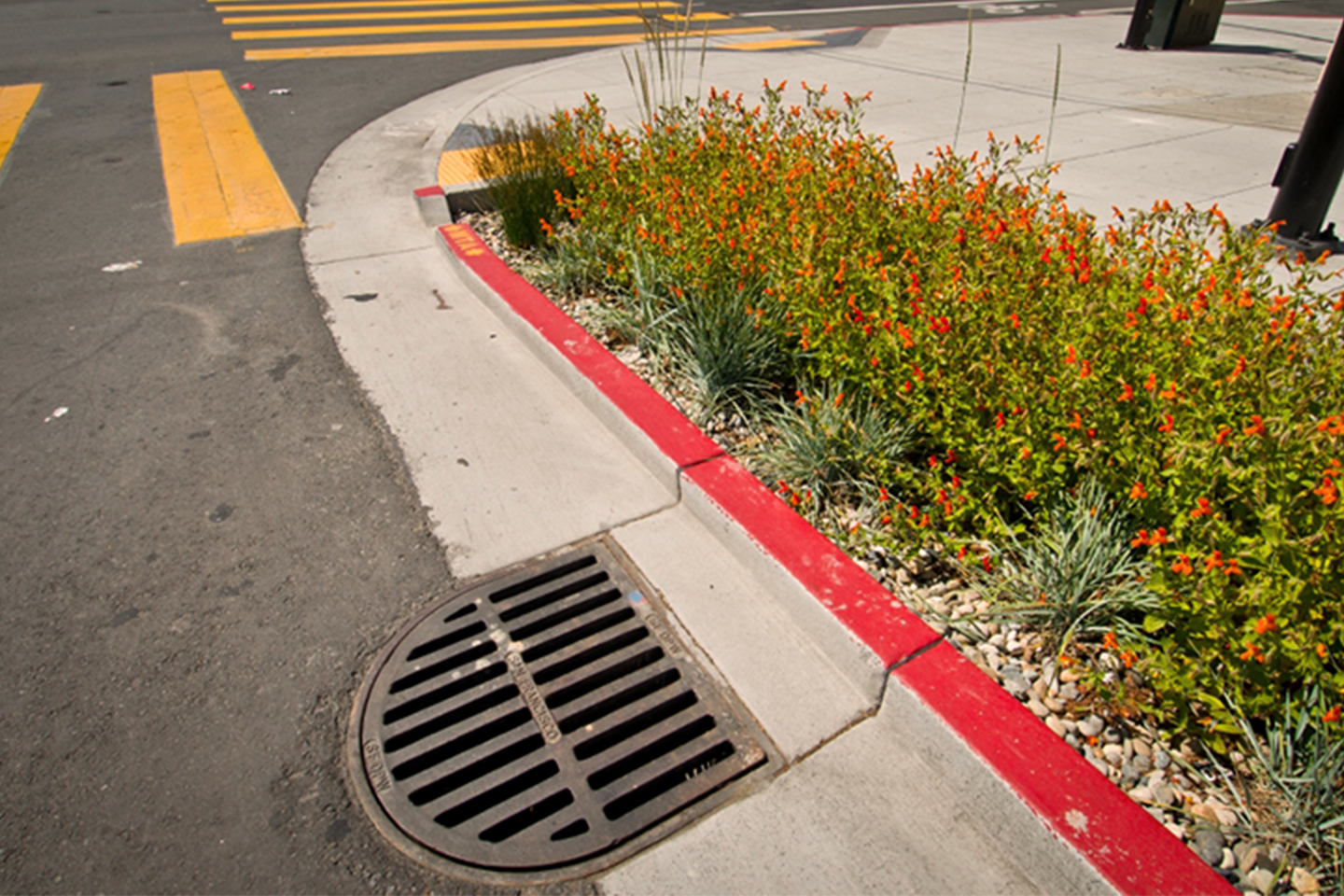
Rain Gardens
Rain gardens capture stormwater runoff from streets, roofs, and parking lots. Plants and soil absorb that water, reducing the amount of runoff flowing into our sewer system.
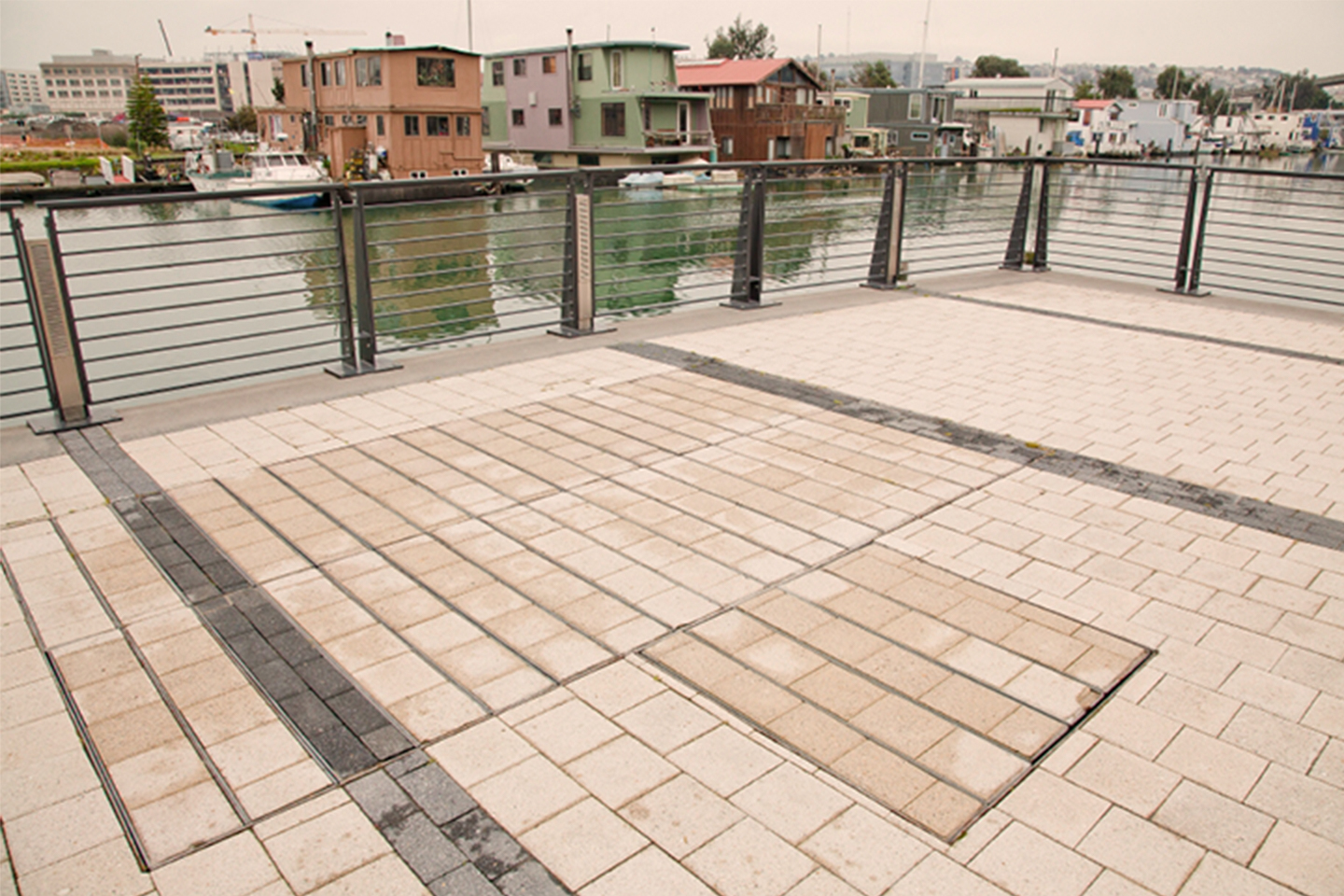
Permeable Paving
Permeable paving allows stormwater to soak into the ground in contrast to hard surfaces (such as concrete or asphalt) where stormwater flows rapidly into the sewer system.
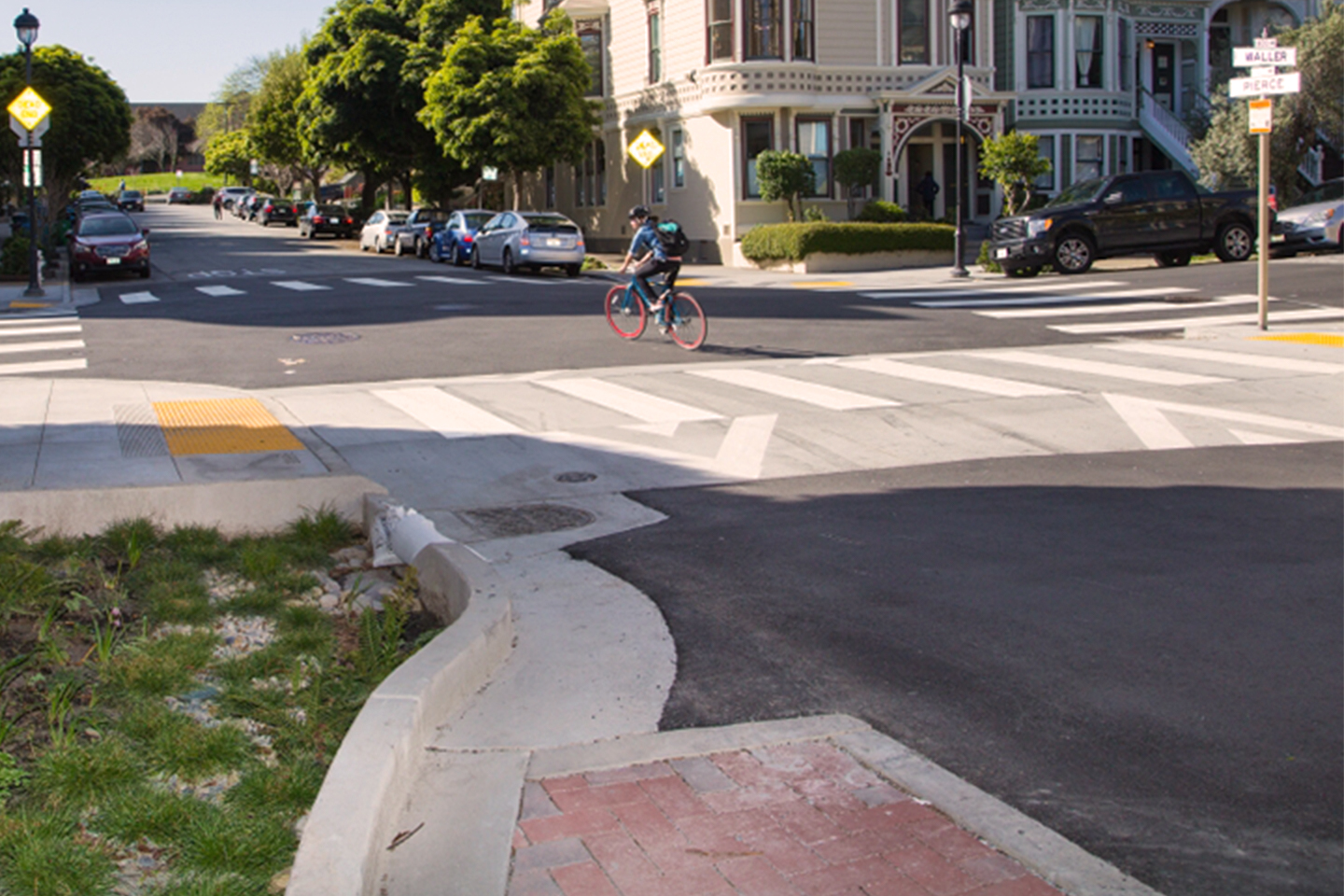
Green Bulb-Outs
Green bulb-outs extend the sidewalk, which slows traffic and reduces the distance to cross the street, increasing pedestrian visibility and safety. These projects also capture and treat stormwater.
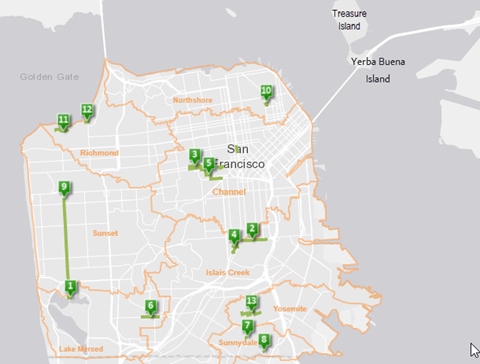
Visit SF Projects
See an interactive map of green infrastructure projects in San Francisco. We are currently updating this map; please check back soon.
Community Benefits of Green Infrastructure
- Enhances community space and beautifies streets.
- Improves street conditions and safety for bicyclists and pedestrians.
- Increases biodiversity and brings green to our neighborhoods.
- Creates a more livable habitat for birds, native plants, and residents.
- Recharges groundwater.
- Reduces Urban Heat Island Effect.
- Improves air quality.
- Creates green jobs.
- Reduces wastewater treatment costs and energy consumption.
Examples of Green Infrastructure Projects in San Francisco
-
Wiggle Neighborhood Green Corridor
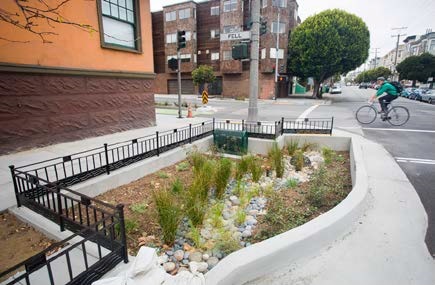
Phase I of the Wiggle Neighborhood Green Corridor features permeable paving on the parking lane and bioretention bulb-outs at four intersection Oak and Fell streets. This project is estimated to have reduced the total volume of stormwater entering the sewer system from the project area by 47% (870,000 gallons) during the 2015-16 wet weather season.
To see reports on this project, contact us at giprojects@sfwater.org.
-
Sunset Boulevard Greenway Project
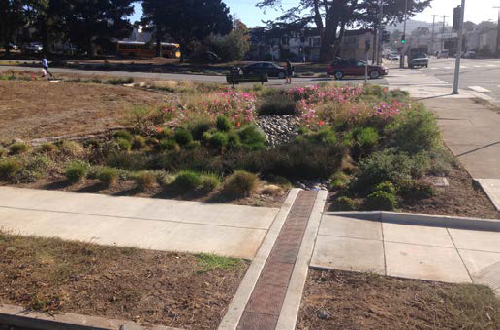
The Sunset Boulevard Greenway project features rain gardens that manage stormwater runoff from 14 blocks of Sunset Boulevard and 37th Avenue. The initial Model Block, completed in the spring of 2016 between Ulloa and Vicente streets is estimated to have reduced the total volume of stormwater entering the sewer system from the project area by 95% (850,000 gallons) during the 2016-17 wet weather season.
To see reports on this project, contact us at giprojects@sfwater.org.
-
Mission & Valencia Green Gateway
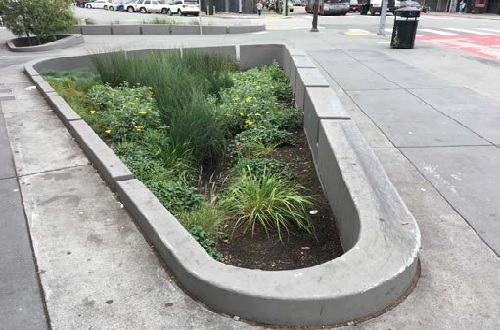
The Mission & Valencia Green Gateway project features eleven bioretention planters and one infiltration gallery located within the street right-of-way that manage stormwater runoff from Mission Street, Valencia Street, Duncan Street, and Tiffany Avenue. This project is estimated to have reduced the total volume of stormwater entering the sewer system from the project area by 86% (1,500,000 gallons) during the 2017-18 wet weather season.
To see reports on this project, contact us at giprojects@sfwater.org.
-
Holloway Green Street
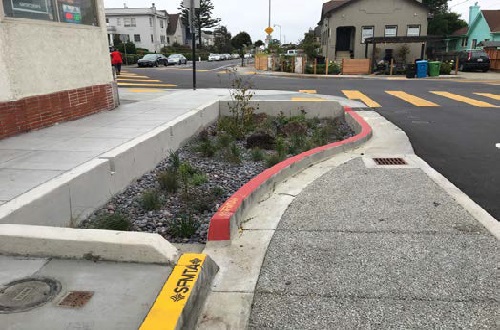
The Holloway Green Street project implements two types of green infrastructure, bioretention planters and permeable pavement, along eight blocks of Holloway Avenue starting from Ashton Avenue and extending east to Lee Avenue. The Holloway Green Street project is estimated to have reduced the total volume of stormwater entering the sewer system from the project area by 77% (655,000 gallons) during the 2017-18 wet weather season, and by 78% (764,000 gallons) during the 2018-19 wet weather season.
To see reports on this project, contact us at giprojects@sfwater.org.
-
Visitacion Valley Green Nodes
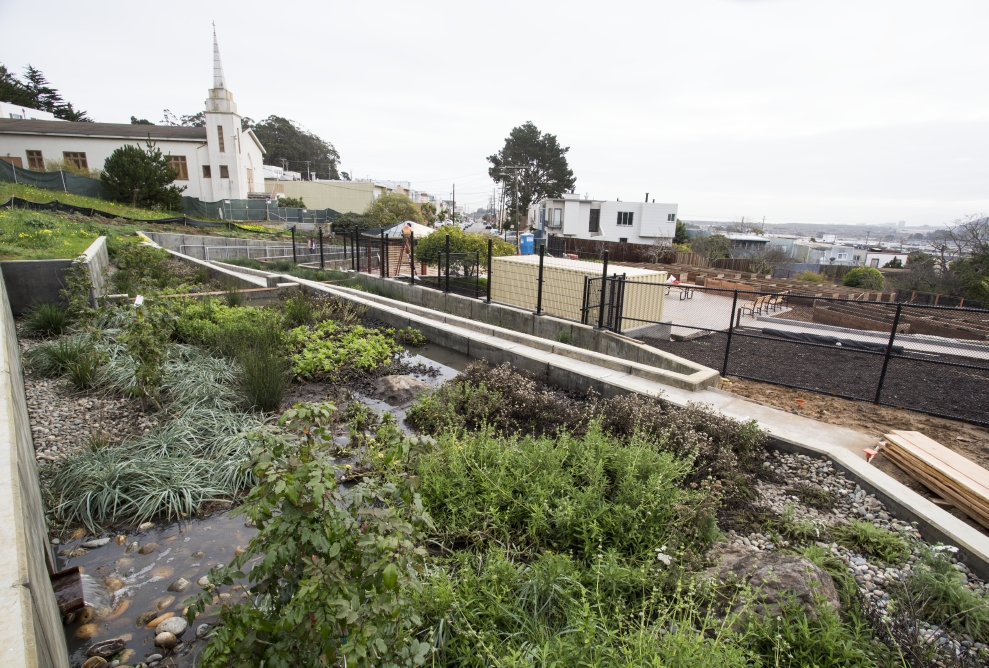
Completed in the summer of 2018, the project develops two distinct green infrastructure locations that improve community spaces and accessibility while helping manage stormwater. The mini-plaza on Sunnydale Avenue features rain gardens that manage 180,000 gallons of stormwater each year (0.18 MG) from nearly a half-acre of adjacent streets, and creates a community gathering space as well as improves pedestrian crossing safety at the busy intersection. The terraced rain gardens in McLaren Park will manage 600,000 gallons of stormwater each year (0.6 MG) from approximately 1.5 acres of impervious surface and provide a pedestrian connection to McLaren Park from Leland Avenue.
-
Baker Beach Green Streets
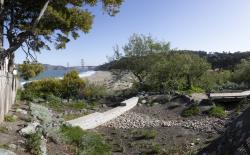
This project has constructed new green infrastructure (GI) features including rain gardens and pervious concrete at locations along El Camino Del Mar and Sea Cliff Avenue. The Baker Beach Green Streets project is estimated to manage 2.6 millions gallons of stormwater each year, from a drainage area of 5.1 acres.
To see reports on this project, contact us at giprojects@sfwater.org.
-
Upper Yosemite Creek Daylighting
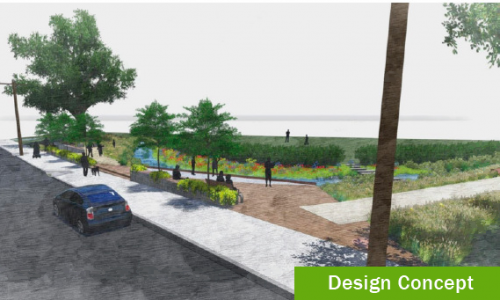
The Upper Yosemite Creek Daylighting Project will feature innovative green infrastructure technologies to manage and reduce stormwater entering the combined sewer system. Technologies will include rain gardens, a creek channel, and a stormwater storage system that collects stormwater to irrigate a new soccer field at Louis Sutter. To learn more, please visit sfpuc.gov/UpperYosemite.
To see reports on this project, contact us at giprojects@sfwater.org.
-
More Projects
The SFPUC monitored six green infrastructure projects from 2009 – 2015 in order to evaluate performance, best practices and design standards for future green infrastructure projects. Monitoring was completed in partnership with SFPUC and San Francisco Estuary Institute (SFEI). Review our monitoring reports below.
Cesar Chavez Streetscape Improvement
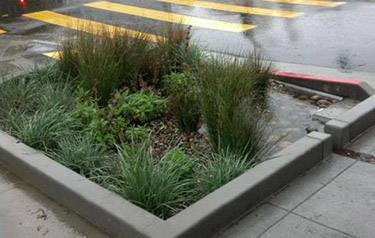
Completed in March 2014 as a demonstration project for the Better Streets Plan, the project includes 18 rain gardens along more than a half mile of impervious streetscape from Hampshire Street to Guerrero Street in the Mission neighborhood of San Francisco. Additional improvements include traffic-calming bulb-outs, street trees, drought-tolerant landscaping and a permanent bike lane.
Kimberg Rainwater Harvesting System
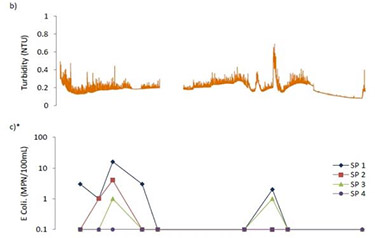
The Kimberg Rainwater Harvesting System was installed in 2009 by the homeowner in the Noe Valley neighborhood of San Francisco. The system collects rainfall from a 1,100 square foot rooftop, treats the water via settling, filtration and Ultraviolet (UV) irradiation, then distributes treated water to interior plumbing fixtures (toilets and laundry machine) and to an exterior hose bib.
Newcomb Avenue Green Street
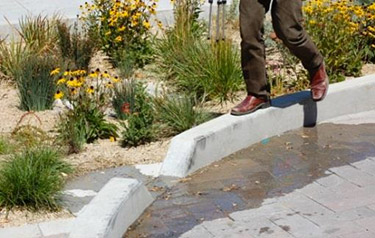
The Newcomb Avenue Green Street was a City of San Francisco pilot project to assess the benefits of green infrastructure implementation to San Francisco's combined sewer system. The model block seeks to provide multiple benefits including urban beautification, traffic calming, increased community gathering spaces, and some return to historical watershed function.
San Francisco State University: Bioswale
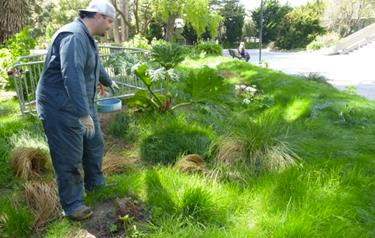
Since 2010, San Francisco State University professors, facilities and grounds crews, and the SFSU Planning Department have successfully collaborated on several green infrastructure installations across the campus. The traditional lawn areas surrounding the SFSU Science Building were selected for green infrastructure construction with the intention to serve as an educational opportunity for the SFSU community.
San Francisco State University: Infiltration Basin
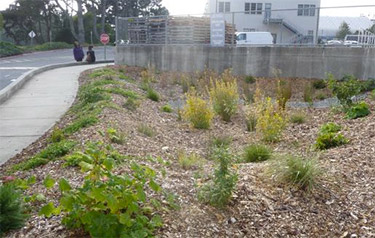
San Francisco State University has implemented several green infrastructure installations across the main campus. The campus has many impervious areas including expansive rooftops, sidewalk areas, and parking lots that result in high stormwater flow rates into the combined sewer system without abatement. Stormwater runoff in some locations is now being directed into bioretention planters, vegetated swales, cisterns and other GI controls.
Sunset Circle
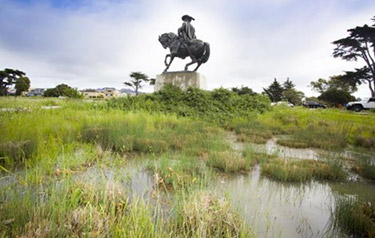
Vegetated swales and infiltration basins were constructed at the Sunset Circle parking lot to reduce stormwater flow to adjacent Lake Merced. The green infrastructure was installed in 2006, and from 2012 to 2014 stormwater flow exiting the system was monitored.