

Water Treatment Process
Quick Summary
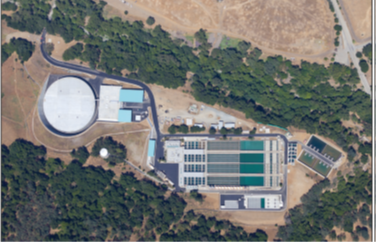
The San Francisco Public Utilities Commission supplies drinking water to almost three million people in the Bay Area. About one-third of the water goes to people in San Francisco. About two-thirds goes to water companies in nearby towns and cities. More than eight out of every ten gallons of water we provide comes from Hetch Hetchy Reservoir. We also have two reservoirs in Alameda County and two reservoirs in San Mateo County. Hetch Hetchy Reservoir is mostly filled with water that comes from melting snow. The mountains around the reservoir are granite and the area is undeveloped. Since that water is very pure, we do not have to filter it. Hetch Hetchy water is disinfected. We expose the water to ultraviolet light as it passes through the Central Valley. Our reservoirs in the East Bay and on the Peninsula are filled by rainwater. We also we bring in water from Hetch Hetchy to fill them. We have a water treatment plant in the Sunol Valley. That plant produces drinking water from the reservoirs nearby. We also have a water treatment plant on the Peninsula, called Harry Tracy. Harry Tracy produces drinking water from the reservoirs on the Peninsula. All of the water we supply meets government standards for quality. You can learn more on this webpage about how we make water safe to drink.
General Overview of SFPUC's Water Treatment Process
San Francisco Public Utilities Commission (SFPUC) owns and operates the Hetch Hetchy Regional Water System that serves 2.7 million customers in San Francisco, San Mateo, Santa Clara, and Alameda counties. This water system extends from the Sierra Nevada to San Francisco and includes reservoirs, transmission systems, and treatment facilities.
Regional Water System
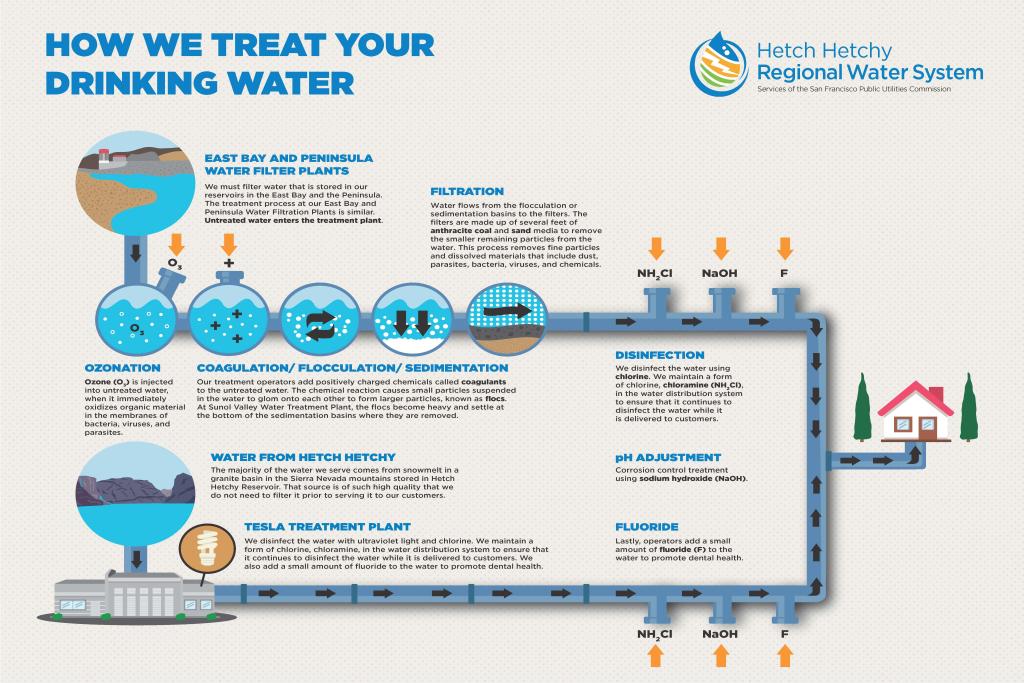
About 85 percent of SFPUC’s drinking water comes from Hetch Hetchy (HH) Reservoir situated in a high elevation, pristine granite rock watershed. Water from this source is of such exceptional quality that the U.S. Environmental Protection Agency (US EPA) granted the SFPUC a Filtration Avoidance Waiver that allows disinfection treatment without filtration of the surface water. The HH water is conditioned with slake lime to increase the pH to reduce the corrosiveness of the water flowing in downstream pipelines and tunnels. Water is disinfected using an ultraviolet light system and sodium hypochlorite (chlorine) at the Tesla Treatment Facility (TTF). During Spring snow melt period, some of the HH water is stored in local reservoirs in the East Bay and Peninsula. These local reservoirs capture precipitation and make up the remaining 15 percent of SFPUC’s water supply. Sunol Valley Water Treatment Plant (SVWTP) treats water from Calaveras and San Antonio reservoirs in the East Bay, and Harry Tracy Water Treatment Plant (HTWTP) treats water from Crystal Springs and San Andreas reservoirs on the Peninsula. The water from the treatment facilities is provided to our wholesale and San Francisco retail customers. Each water treatment plant produces water meeting or surpassing the US EPA and State standards.
Water Treatment Process
Based on the source water being treated, the SFPUC uses water treatment methods that include the following steps:
Coagulation/Flocculation: Coagulants are positively charged chemical solution used to neutralize the negative charge of small particles (dissolved and suspended) in the water. This chemical reaction causes the small particles to stick together and form larger particles. The small particles are mixed with the coagulant to form larger particles, known as floc, that can settle by gravity. These larger particles are removed in subsequent steps.
- SVWTP and HTWTP use coagulation and flocculation treatment methods.
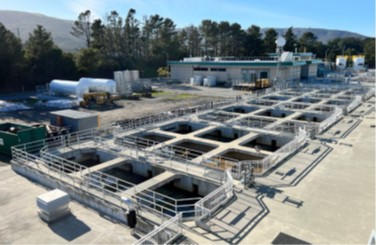
Sedimentation: The flocculated water flows into sedimentation basins where the larger particles settle to the bottom and are removed. These sedimentation basins utilize plate settlers to optimize the sedimentation process. Most of the particles are removed in this step of the process. Water is collected from the top of the sedimentation basins and flows into the filters (next step).
- SVWTP uses sedimentation.
Filtration: The almost clear water from the top of the sedimentation tanks flows into the filters to remove any remaining particles. The filters are made up of layers of anthracite coal and sand. This process removes very small, suspended particles that include dust, parasites, bacteria, and viruses.
- SVWTP and HTWTP use filtration.
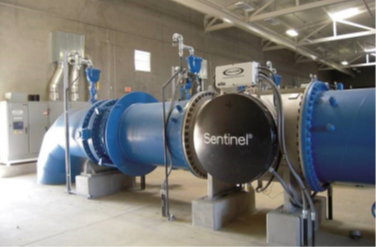
Disinfection: The water is disinfected using chlorine, chloramine, ozone, or ultraviolet light to kill or inactivate the pathogens. The latter two disinfection methods have short contact times in water but have significant efficacy for inactivating viruses and pathogens, especially protozoans like Giardia and Cryptosporidium. A secondary disinfectant, chloramine is maintained in the water distribution system (water mains and storage tanks) to ensure high quality drinking water is delivered to customers.
- TTF use ultraviolet light and chlorine. SVWTP and HTWTP use chlorine and chloramine disinfection. HTWTP uses ozone. SVWTP is in the construction phase for adding an ozone disinfection system.
Fluoridation: Fluoride is added in small concentrations to promote dental health.
- TTF, SVWTP, and HTWTP add fluoride to water before it's delivered to customers.
To ensure the highest water quality is delivered to our customers, the treated water quality is tested regularly for the following parameters:
- pH
- Total Coliform Bacteria
- Chlorine
- Hardness
- Turbidity
- Alkalinity
- Flouride
- Free Ammonia
- Chloride
- Nitrite
- Conductivity
- Disinfection By-Products (TTHM and HAA5)
- Temperature
- Total Organic Carbon
We’re Committed to Quality: Our highly trained chemists, technicians and inspectors consistently monitor the water we serve—throughout our system, every day of the year. For additional information and materials, please visit SFPUC Water Quality. For questions about YOUR water, please call 311. You can also visit sf311.org.
October 2026