

Nitrate and Drinking Water
Quick Summary
Nitrate is a chemical in groundwater that comes from both natural and manmade sources. Small amounts of nitrate in groundwater are found naturally in soil. High amounts of nitrate in groundwater happen when people use fertilizers or animal manure, or when sewer pipes leak. Nitrate is carried by rain and irrigation. It can easily travel through soil and into groundwater. The San Francisco Public Utilities Commission (SFPUC) monitored nitrate in all its water. We test water in our reservoirs, in our groundwater wells, and treated drinking water. The SFPUC’s drinking water is safe to drink. The State sets an amount of nitrate in the water that is acceptable. The amount of nitrate in water delivered to our customers is far less than that. This webpage provides more information about Nitrate.
Sources Of Nitrate
Nitrate is a contaminant found in groundwater that comes from both natural and manmade sources. Low concentrations of nitrate come from the erosion of natural deposits in soil. High concentrations of nitrate originate from fertilizer application, animal waste, septic systems and/or leaky sewer pipelines. Nitrate, carried by rain or irrigation water, can easily travel through soil and into groundwater.
Nitrate In Drinking Water Can Be Removed
EPA and California regulate nitrates in drinking water for consumer protection. The California’s State Water Resources Control Board (SWRCB) requires nitrates in drinking water to be removed by several technologies, mainly reverse osmosis and ion-exchange. These treatment approaches are employed by utilities or customers with point of use devices using appropriately certified treatment units (see National Science Foundation certified products).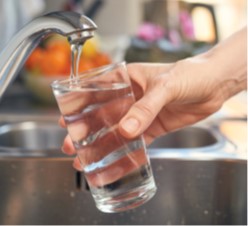
Nitrate Risks
Infants under six months old fed with formula mixed with water containing nitrate at a level exceeding the California or federal drinking water standard can develop methemoglobinemia, commonly known as “blue baby syndrome.” The nitrate in the infant’s stomach converts to nitrite, a form of nitrogen compound that limits the blood’s ability to transport oxygen to the body tissues. When this happens, the infant can experience shortness of breath and blueness of the skin around the eyes and mouth, which can lead to coma and eventual death if immediate medical care is not administered. Infants six months and younger, and pregnant women may also be susceptible to methemoglobinemia if drinking water from a private well that has not been tested for the presence of nitrate and nitrite. Consumers using private wells should be aware of the nitrate risks and test nitrate concentrations in their drinking water source.
There may be other possible health effects caused by long-term exposure to nitrate in drinking water at concentration even below the current standard.
More information on nitrate toxicity in drinking water can be found on the websites of the United States Environmental Protection Agency (USEPA), the State Water Resources Control Board (SWRCB), and the Office of Environmental Health Hazard Assessment (OEHHA).
Your Drinking Water Is Tested for Nitrate
The San Francisco Public Utilities Commission (SFPUC) monitors nitrate in all its waters, including surface water reservoirs, groundwater wells, and treated water. The SFPUC’s drinking water is safe to drink, with nitrate levels in water delivered to customers far below the MCL.
The table below summarizes the results of our nitrate tests conducted between 2017 and 2025. There are very low nitrate levels in our surface water sources as well as drinking water delivered to customers. Although there are some elevated nitrate levels in some of our groundwater sources, SFPUC has been using the SWRCB-approved treatment method by blending small amounts of the groundwater supply with surface water. Blending lowers nitrate levels from groundwater such that the drinking water delivered for your consumption is safe, and well below the Public Health Goal (PHG) and Maximum Contaminant Level (MCL) of 10 milligrams per liter (mg/L) of Nitrate-Nitrogen (NO3-N).
ISFPUC Nitrate Monitoring Results (PHG and MCL = 10 mg/L N03-N)*
| Location | Date | N03-N (mg/L) |
|---|---|---|
| Surface Water Supplies | 2017 to 2025 | Non-detect (<0.04) – 0.58 (median = non-detect) |
| Groundwater (Regional and SF Wells)* | 2017 to 2025 | Non-detect (<0.04) – 46.6 (median = 6.82) |
| Treated Water Delivered to Customers | 2017 to 2025 | Non-detect (<0.04) – 0.53 (median = 0.09) |
*Groundwater is never delivered directly to customers. Groundwater is always blended with surface water. Since 2017, the annual average groundwater contribution is 0.4% of total supply.
The Westside Groundwater Basin is a Safe Water Source
The SFPUC continues to monitor and reduce nitrate concentrations in groundwater wells prior to customer deliveries. SFPUC has been studying and monitoring the quality of the Westside Groundwater Basin, which runs from San Francisco to the Peninsula, for more than a decade. Blending groundwater with surface water is a practice approved and permitted by the SWRCB for compliance with the MCL for customer deliveries. Water supplied by the SFPUC consistently meets the drinking water standard for nitrate (monitoring data are provided at https://www.sfpuc.gov/programs/water-supply/groundwater). 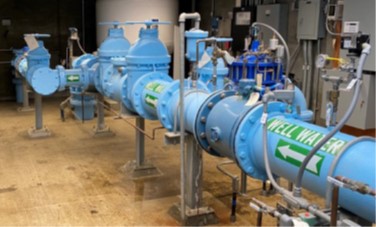 Golden Gate Park groundwater facility (Source: C. Ripley, 2020)
Consumer Resources: Regulation/Health
- SFPUC: San Francisco Groundwater Supply Project
- OEHHA: Nitrate PHG
- State Water Resources Control Board: Nitrate Drinking Water MCL
- U.S. Environmental Protection Agency: National Primary Drinking Water Regulations
We’re Committed to Quality
Our highly trained chemists, technicians and inspectors consistently monitor the water we serve—throughout our system, every day of the year. For additional information and materials, please visit our Water Quality webpage.
For questions about YOUR water, please call 311. You can also visit sf311.org.