

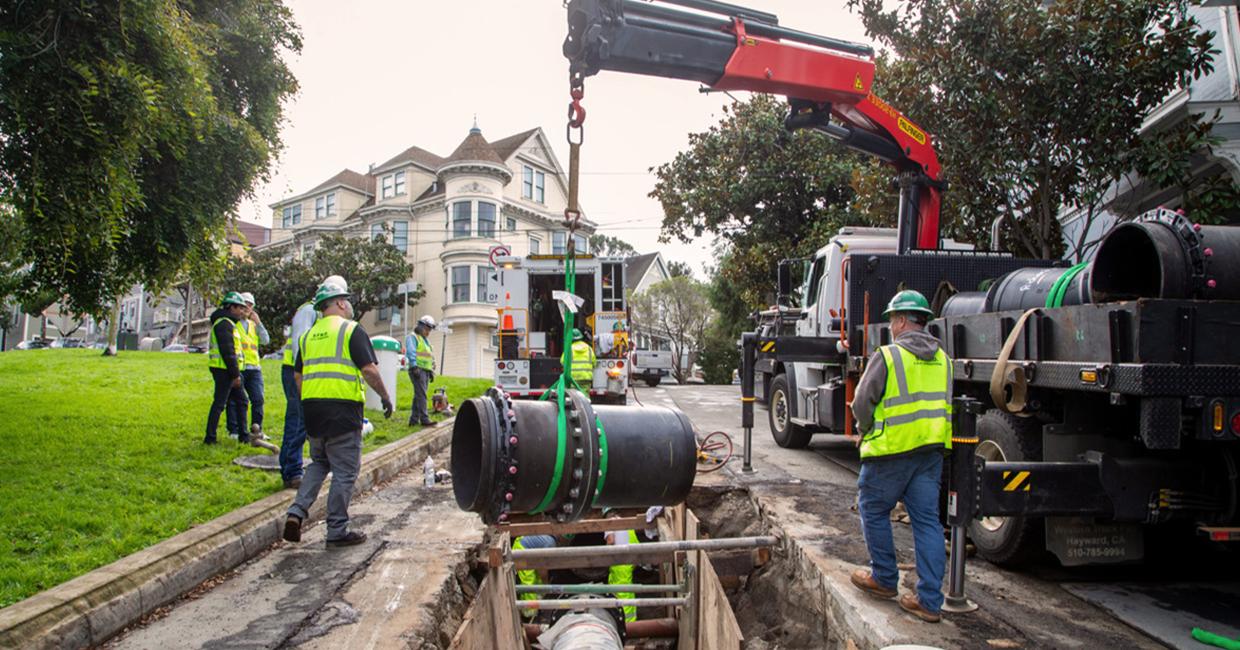
An earthquake can strike at any moment, and the San Francisco Public Utilities Commission (SFPUC) works hard to be quake-ready. Recently, the SFPUC finished replacing some of the water system’s oldest pipelines with earthquake-resistant pipes along a critical four-mile route connecting College Hill Reservoir to San Francisco General Hospital, the city’s primary trauma center. This helps ensure that first responders and San Francisco’s most vulnerable residents will have water when they need it most.
Completed over 11 years, the project strengthened the system from the source, with seismic upgrades to College Hill Reservoir. College Hill is San Francisco’s oldest working reservoir and holds 13 million gallons of water, enough to fill more than 19 Olympic-size swimming pools! Much of the City’s aging water system is over a century old, and the project was a test case in applying earthquake-resistant pipe in a dense urban setting with challenging underground conditions.
What’s the secret to these earthquake-resistant pipes? Their flexible joints can compress, extend, and deflect and move with the ground during shaking. First deployed in Japan 50 years ago, they have a perfect track record surviving powerful tremors.
As we commemorate the 120th anniversary of the 1906 earthquake, history shows how vulnerable water systems can be. Watch the below video for more details about the SFPUC’s efforts to modernize aging infrastructure that residents and emergency services rely on every day: